
Northern Oil and Gas, Inc. (NYSE: NOG) has taken a significant step into Canada with its first international acquisition. The company announced on May 26, 2026, that it has agreed to acquire a 25% undivided non-operated interest in light-oil producing properties and substantial undeveloped acreage in Alberta’s Duvernay Shale from Parallax Energy Operating Inc.
This “buy-down” deal marks NOG’s entry into one of North America’s premier light-oil shale plays and fits squarely into its proven non-operated acquisition model. The transaction adds immediate production, high-quality inventory, and geographic diversification while maintaining a disciplined approach to capital allocation and balance sheet strength.
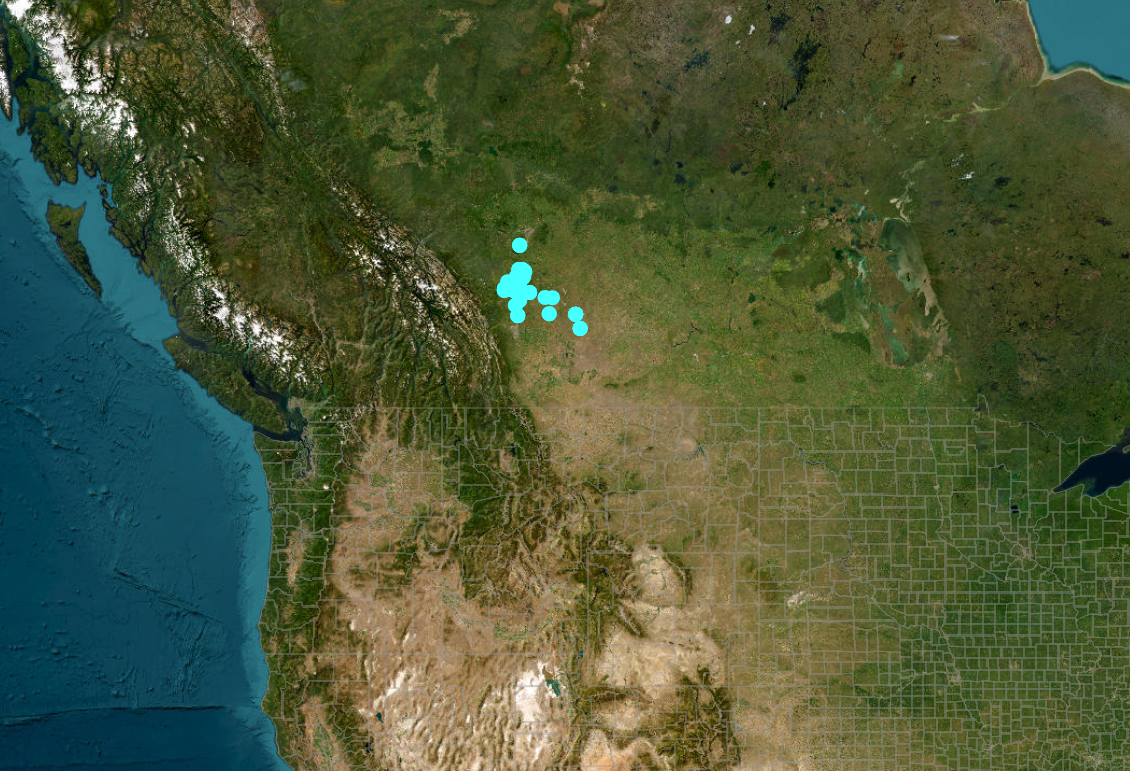
Deal Terms and Asset Overview
NOG will acquire a 25% non-operated stake in the Light-Oil Duvernay Assets (Duvernay East Shale Basin, Alberta). Key metrics net to NOG include:~4,000 Boe per day of production (2-stream, approximately 80% light oil) expected on average for full-year 2027.
~75,000 net acres with over 500 gross high-quality, low-breakeven drilling locations.
Approximately 20 years of inventory at current activity levels, with average breakevens below $50 WTI.
Estimated ~US$0.6 million per net location.
The initial unadjusted purchase price is CA$350 million (approximately US$259 million), subject to customary closing adjustments. Consideration consists of:
CA$237 million in cash.
CA$113 million (~US$83.5 million) in NOG common stock issued to the seller at closing.
Potential contingent consideration of up to CA$25 million (~US$18.5 million) payable in Q1 2028 (cash or stock at NOG’s election) if average oil prices meet certain thresholds through the end of 2027.
The effective date is April 1, 2026, with closing expected in late Q2 2026. NOG has formed a wholly-owned Canadian subsidiary, NOG Energy Canada, Ltd., for the transaction. Substantially all assets will be operated by Parallax (a portfolio company backed by Carnelian Energy Capital), under a long-term Joint Development Agreement that includes multi-year drilling commitments and an Area of Mutual Interest.
Post-closing capital expenditures on the assets are expected to be up to US$40–45 million in 2026 and US$45–50 million in 2027. NOG plans to hedge currency exposure on operating costs and may opportunistically repurchase a portion of the stock issued in the open market.
The transaction multiple is less than 3.0x expected next-twelve-months unhedged cash flow from operations (as of the effective date) and is described as accretive to key valuation metrics (TEV/EBITDA, EPS, FCF, and cash flow per share) over a multi-year horizon. The assets are expected to be self-funding and leverage-neutral to be accretive in the long term.
Context from NOG’s Q1 2026 Results
The Canadian move comes on the heels of a solid operational quarter for NOG, despite GAAP accounting noise.In Q1 2026 (ended March 31), NOG reported:Record quarterly production of 148,303 Boe per day (50% oil), up 6% sequentially and 10% year-over-year.
Oil and gas sales of $539.9 million.
Adjusted EBITDA of $342.5 million and Adjusted Net Income of $74.7 million ($0.74 per adjusted diluted share).
GAAP net loss of $522.8 million ($5.31 per share), driven by non-cash items: a large unrealized mark-to-market loss on derivatives (~$521 million) and a $268.3 million ceiling-test impairment (lower SEC oil prices).
Cash flow from operations of $323.6 million; Free Cash Flow of $30.4 million.
Strong liquidity of $1.2 billion ($37 million cash + $1.1 billion committed revolver availability).
Long-term debt of approximately $2.55 billion (net), following recent refinancing that extended maturities (including 2033 senior notes) and improved revolver terms.
NOG also closed its joint Ohio Utica acquisition (~$464.6 million) in February 2026 and continued aggressive ground-game activity. The company maintains a low cash G&A structure and has demonstrated consistent execution on its non-operated strategy across the Permian, Appalachian, Williston, and other basins.
How the Acquisition Helps the Balance Sheet and Growth Profile
This deal enhances NOG’s scale without overextending the balance sheet:
Immediate production uplift — The ~4,000 Boe/d adds meaningful volume (roughly 2.7% of current levels) with high oil content and expected operating costs below $7.50 per Boe (well under NOG’s corporate average).
High-quality, long-life inventory — Over 500 locations with strong economics in a premier light-oil shale play provide years of runway at attractive breakevens.
Conservative funding — The equity component aligns seller interests, reduces immediate cash outlay, and supports per-share accretion. Remaining cash needs are covered by existing liquidity, free cash flow, and the revolver — keeping leverage in a comfortable zone.
Pro forma 2026 guidance update (released with the deal) — Production guidance raised to 143,000–148,000 Boe/d (from 139,000–143,000); oil production to 71,500–73,500 Bbl/d. Total capex remains $850–900 million (flat). LOE guidance improved toward the low end; oil differentials also tightened.
Overall, the transaction supports NOG’s model of disciplined M&A to drive production growth, cash flow, and returns while returning capital to shareholders (current dividend $0.45/share quarterly). It is leverage-neutral to accretive and self-funding over time.
Investor Perspective: How to View This Deal
Bullish factors for investors:
Disciplined, accretive M&A in a high-quality asset class (light oil inventory is increasingly scarce).
Geographic diversification into another top-tier North American basin reduces single-jurisdiction concentration risk.
Fits the proven playbook — Non-operated interest with a capable operator (Parallax), long-term JV structure, and creative deal structuring (stock + contingent).
Accretive metrics and low transaction multiples signal management’s focus on per-share value.
Updated guidance shows the deal is already incorporated without increasing the overall capital budget.
Key areas to monitor:
Closing and integration execution.
Duvernay well results and development pace under the JV.
Realized prices (including CAD/USD conversion and any differentials).
Capital efficiency on the new assets.
Broader commodity price environment and hedging effectiveness.
For growth-oriented energy investors, this looks like another smart, value-accretive expansion that extends NOG’s inventory runway and enhances its position as a scaled non-operator. The stock component and strong existing liquidity help mitigate near-term balance sheet concerns.
Will Canadian Carbon Taxes Materially Impact the Bottom Line?
Canada’s carbon pricing regime (federal Output-Based Pricing System combined with Alberta’s TIER program for large emitters) applies to upstream oil and gas facilities above certain emission thresholds. Prices are on an upward trajectory (with ongoing federal-provincial negotiations on pace and levels), and compliance involves benchmarks, potential payments for excess emissions, or use of credits/offsets.
For the Duvernay light-oil shale assets, the impact is expected to be manageable and not a material headwind:
Shale development (horizontal drilling + completions) generally has lower emissions intensity than oil sands operations (no mining or large-scale steam injection).
Primary emission sources (methane, fuel gas, flaring/venting) are addressable through operational practices and technology.
NOG expects very low operating costs on these assets (<$7.50/Boe), suggesting efficient operations that should perform well against tightening benchmarks.
As a non-operator, NOG participates via the JV; the operator (Parallax) handles day-to-day compliance. Costs are typically shared or passed through in joint venture accounting.
NOG is hedging currency exposure on Canadian operating costs, providing additional protection.
While carbon pricing adds a real operating cost (and will rise over time), it is a known, quantifiable factor in Canadian upstream economics. Many efficient Canadian producers continue to generate strong returns. The Duvernay’s high-quality reservoir and low breakevens provide a buffer. NOG’s diversified North American portfolio and hedging program further mitigate single-jurisdiction policy risk. It will be one that the Energy News Beat finance team watches.
Bottom line for investors: Carbon taxes represent a modest, manageable cost that was almost certainly modeled into the deal economics. They do not appear to be a deal-breaker and may even incentivize further efficiency gains or future technology adoption (e.g., electrification, methane detection, or CCUS opportunities over the long term).
Conclusion
Northern Oil & Gas continues to execute on its strategy of scaling through disciplined, non-operated acquisitions in premier basins. The Duvernay transaction delivers immediate production, substantial high-quality inventory, geographic diversification, and per-share accretion — all while preserving balance sheet strength and keeping 2026 capex flat.
For investors, this is a clear positive signal of management’s ability to source and structure attractive deals in a competitive environment. As NOG integrates the assets and advances development with Parallax, the focus will shift to delivery on well results, cost control, and free cash flow generation.
This move reinforces NOG’s position as a leading non-operator with a growing, diversified North American footprint.
Appendix: Sources and Links
- NOG Official Press Release – Duvernay Acquisition (May 26, 2026):
https://www.businesswire.com/news/home/20260526926252/en/NOG-Announces-Strategic-Entry-into-Canada-with-Light-Oil-Duvernay-Acquisition-Takes-25-Undivided-Stake-in-Assets-with-Long-Term-Joint-Development-Agreement - Bloomberg Original Article:
https://www.bloomberg.com/news/articles/2026-05-26/northern-oil-gas-nog-said-to-near-first-deal-for-canadian-shale-assets?srnd=phx-industries-energy - NOG Q1 2026 Earnings Release (April 28, 2026):
https://www.businesswire.com/news/home/20260428207853/en/NOG-Announces-First-Quarter-2026-Results - NOG Investor Relations / Quarterly Results:
https://noginc.com/investor-relations/financials/quarterly-results/default.aspx
https://www.northernoil.com/ - Additional Context on Deal (8-K Filing Summary): StockTitan / SEC filings references.
- Canadian Carbon Pricing Context: Derived from public reporting on federal OBPS, Alberta TIER system, and industry analyses (emissions intensity comparisons between shale and oil sands). Specific Duvernay economics incorporate standard upstream carbon cost assumptions.
Energy News Beat Channel — Delivering clear, fact-based analysis on the energy sector for investors and industry professionals. Always do your own due diligence; this is not investment advice.
The post Northern Oil and Gas Reaches First Deal for Canadian Energy Assets – Strategic Duvernay Entry Strengthens Scale, Diversification, and Long-Term Inventory appeared first on Energy News Beat.