
The Energy Realities Gang of Irina Slav, Dr. Tammy Nemeth, David Blackmon, and me had way too much fun this morning.
What a wild day with Irina Slav, Dr. Tammy Nemeth, David Blackmon and Stu Turley on the Energy realities podcast.
We had GREAT questions from the live viewers on YouTube and LinkedIn! Thank you all.
1. Geopolitical Conflicts & Energy Markets
The podcast extensively covers the U.S.-Israel-Iran tensions and how these conflicts directly impact global energy markets, particularly affecting oil and LNG (liquefied natural gas) prices and availability.
2. Global Oil Pricing Complexities
There’s significant discussion about the disconnect between futures prices (Brent, WTI) and actual physical delivery prices at different global locations—highlighting how financial markets don’t always reflect real-world energy flows.
3. Europe’s Energy Security Crisis
A major focus is Europe’s struggle to find alternative energy sources, especially LNG, to replace Russian gas supplies following geopolitical disruptions. This has major implications for energy prices and continental security.
4. Renewable Energy Debate
The discussion critiques the effectiveness of renewable energy investments (wind and solar), questioning whether the massive capital deployed has delivered proportional increases in energy supply contribution.
5. Geopolitical Realignment & Trade Blocs
Discussion of potential new energy trading relationships and blocs involving Canada, the UK, EU, and China, reflecting shifting global power dynamics.
6. North American Energy Security
Particular attention to California’s reliance on imported oil and gas, and what this means for broader U.S. “energy dominance” goals.
7. Market Manipulation & Financial Disconnects
They explore how traders and political actors manipulate energy markets, and the gap between financial markets and actual physical energy flows.
8. Coal’s Ongoing Role
Despite a renewable energy push, coal remains relevant in the global energy mix, with challenges in transitioning away from it.
9. Energy Infrastructure Projects
Discussion of new pipelines and LNG terminals as potential solutions to energy security, along with their political and regulatory challenges.

Watch this video on YouTube.
We covered some interesting points on the price of Paper vs. Physical delivery of oil.
In the energy markets, there’s no single “oil price” anymore — and today’s fractured reality proves it. As highlighted in a sharp analysis posted this morning by commodity trader Jack Prandelli, the spreads tell the real story:
Forties (physical) → $134
Dated Brent (physical) → $116
Brent futures → $99
WTI → $87
Canadian crude → $72
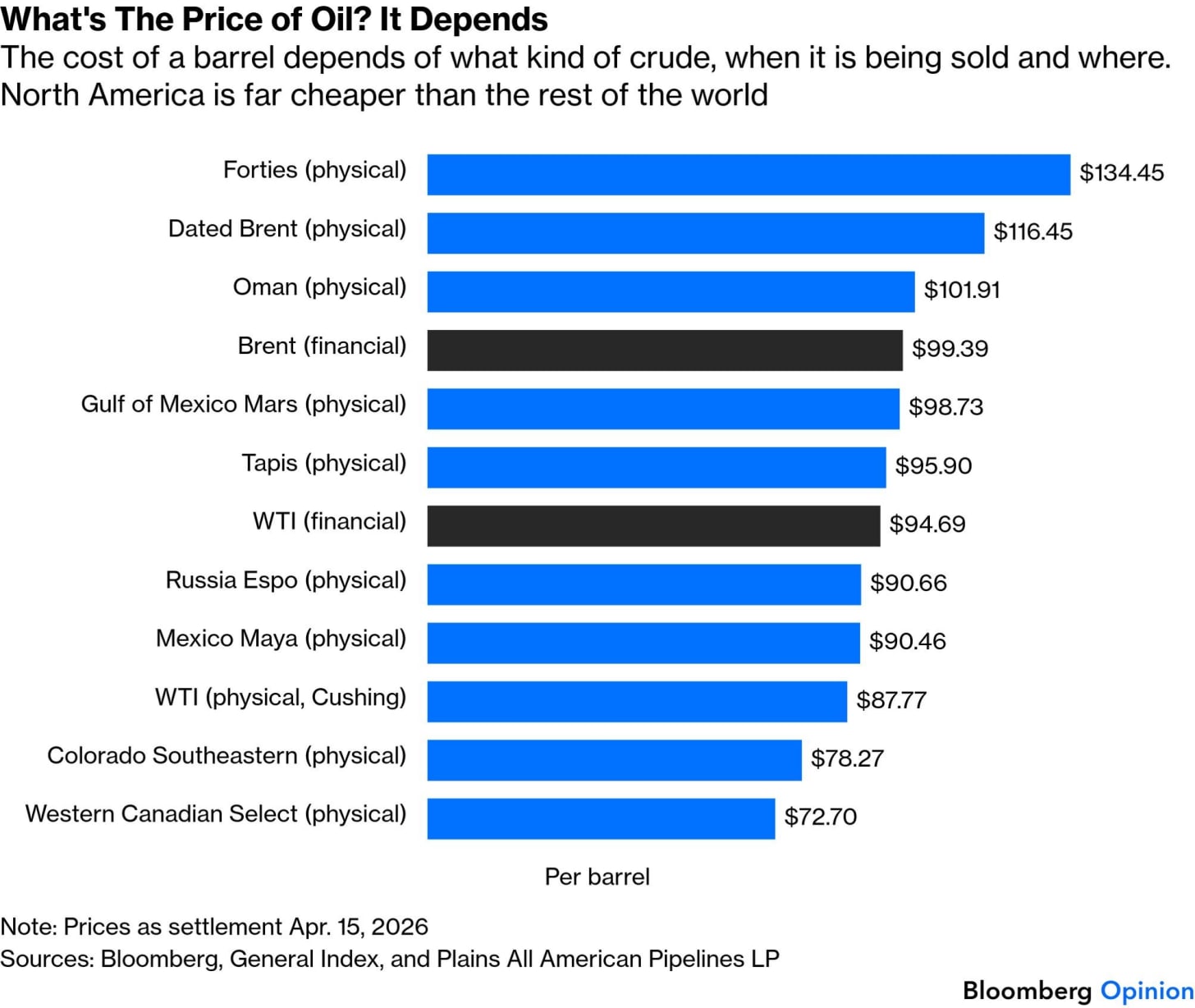
That’s not one market. That’s fragmentation on steroids.
Paper vs. Physical: Two Completely Different Worlds“Paper” oil refers to financial contracts traded on exchanges — think Brent or WTI futures. These are what you see quoted on CNBC or Bloomberg screens. They’re liquid, standardized, and often reflect trader sentiment, hedging, and speculation about future supply and demand.“Physical” oil is the actual crude in the water or at the terminal — Dated Brent (the benchmark for real North Sea cargoes), Forties, Oman, or specific grades like those loading in Yanbu or the Gulf of Mexico. These prices are what refiners and end-users actually pay to get barrels delivered. Location, quality, logistics, and immediate availability matter far more than a futures ticker.
The massive premium on physical barrels (sometimes $30–$40 above futures) isn’t theoretical. It’s the direct result of supply getting trapped behind chokepoints. Right now, the Strait of Hormuz disruption has locked in millions of barrels in the Persian Gulf, forcing Europe and Asia to bid aggressively for whatever real crude they can secure. North American oversupply keeps WTI and Canadian grades cheap locally, while physical North Sea and Middle East grades command huge location premiums.
As Prandelli put it: “Physical barrels ≠ paper price. Location is everything. Logistics > benchmarks.” In a crisis, oil stops being global. It becomes regional, physical, and political.
Full Story: What is the Current Price of Oil? Well It Depends Who’s Asking
Buckle up, the world is changing and we can only see part of the information, as much of it is being kept from the public. Just my opinion. So try to verify every source, and it is difficult trying to write articles now as things are chainging hourly.
This week I am interviewing Dan Doyle, and he has a really cool book that I highly recommend reading.

Thank you to all of our subscribers, and paid Substack subscribers! You all make a difference in this information war we are facing!
The Energy News Beat Substack:

For David Blackmon

For Tammy Nemeth

For Irina Slav

The post Geopolitics Reshapes the Energy Markets appeared first on Energy News Beat.