
A brutal European heatwave is once again exposing critical vulnerabilities in the continent’s energy infrastructure — and France’s nuclear fleet is front and center. And Germany’s nuclear fleet was blown up intentionally.
Record-high river temperatures are forcing operators to curb output at up to five nuclear reactors this week, with at least two already derated. Environmental regulations prohibit discharging cooling water that would raise river temperatures beyond safe ecological limits. When rivers are already scorching from extreme heat, reactors simply cannot run at full power without violating those rules.
This isn’t an isolated glitch. It’s the latest reminder that even the most reliable low-carbon baseload power source faces real-world constraints in a warming climate — and that France’s nuclear fleet has been weakened by years of maintenance challenges.
France’s Nuclear Backbone Under Strain
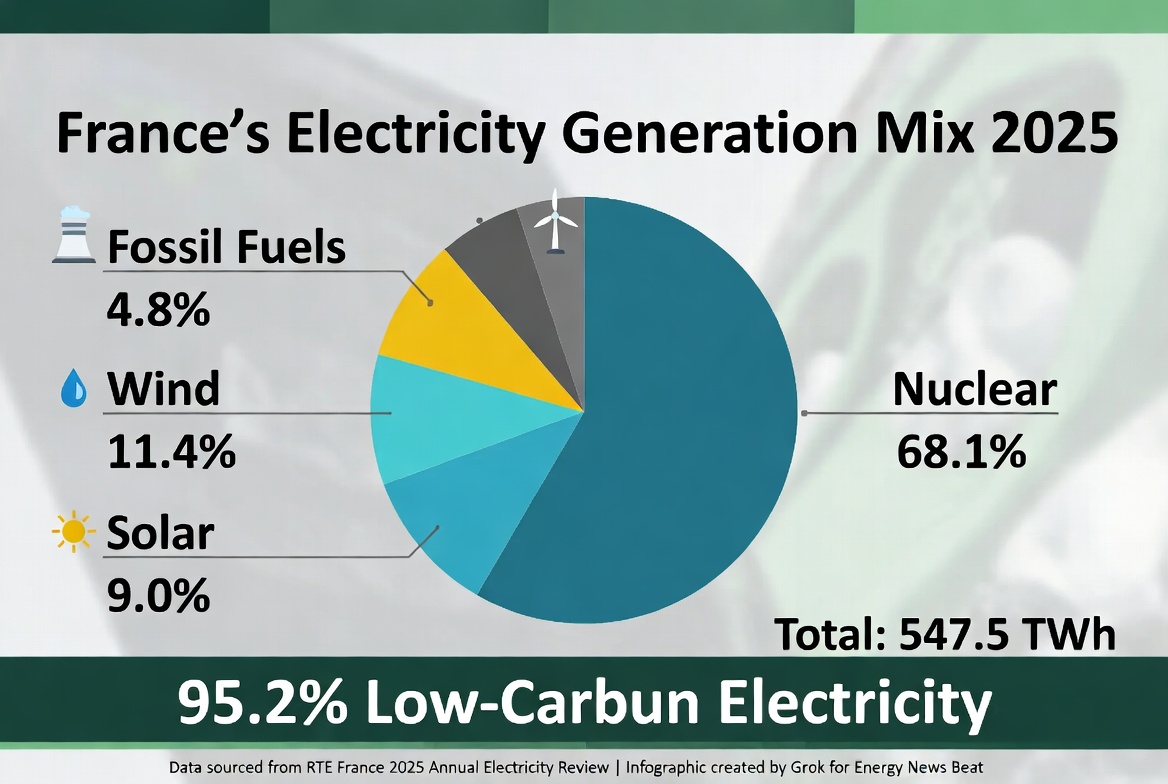
France operates the largest nuclear fleet in Europe: 57 reactors with roughly 63 GW of installed capacity. In a normal year, nuclear supplies around 68–70% of the country’s electricity (373 TWh out of 547.5 TWh total generation in 2025).
2025 France Electricity Mix (RTE data): Nuclear: 373 TWh (68.1%)
Hydropower: 62.4 TWh (~11.4%)
Wind: ~49.6 TWh (~9%)
Solar: 32.9 TWh (~6%)
Fossil fuels: ~4.8% (historic lows)
Overall low-carbon share: 95.2% (521.1 TWh)
Nuclear remains the undisputed backbone, delivering dispatchable, weather-independent power that wind and solar cannot match on their own.Yet the fleet has not been immune to problems. The average reactor age is around 39 years. A massive “Grand Carénage” life-extension and safety-upgrade program (costing roughly €49.4 billion) ran from 2014–2025 and inherently reduced availability during major works.
The real crisis hit in 2021–2023. COVID-19 delayed routine maintenance, creating a backlog. Then, routine inspections revealed stress corrosion cracking in critical safety piping (particularly in N4 and P4 reactor designs that had been modified from the original Westinghouse specs). At peak in 2022, more than half the fleet was offline — up to 32 reactors at one point. Nuclear availability plummeted to as low as ~40% of maximum capacity for weeks. Annual output crashed to just 279 TWh (a ~30% drop from normal levels).
France went from being Europe’s reliable nuclear exporter to a net importer during parts of the energy crisis. The financial hit on EDF was severe: a record €17.9 billion loss in 2022, largely tied to the outages.
Repairs and inspections continued into 2023, but by 2024–2025 the fleet had largely recovered. Nuclear generation climbed back to 361.7 TWh in 2024 and 373 TWh in 2025, with availability returning to a healthy 74% — close to pre-crisis norms.
How Green Policies Contributed to the Vulnerability
For over a decade, French and EU policy heavily prioritized the rapid expansion of wind and solar under Net Zero and Green Deal frameworks. France’s 2015 energy transition law originally targeted reducing nuclear’s share to 50% by 2025 (later postponed to 2035, then effectively scrapped). Billions flowed into renewable subsidies, feed-in tariffs, and capacity auctions, driving explosive growth in solar (especially) and wind.
Meanwhile, nuclear faced political headwinds, regulatory delays on new builds (Flamanville EPR took years and cost overruns), and questions about long-term funding priorities. EDF carried heavy debt, partly linked to the broader energy transition costs and the ARENH mechanism that forced it to sell power cheaply to competitors.
The result: a world-class nuclear fleet that was not always given the sustained political and financial priority it needed for proactive maintenance during a period of aging infrastructure and unexpected technical discoveries. Critics point to underinvestment in skills, workforce planning, and timely outages as contributing factors alongside the pandemic shock.
Wind and solar now contribute meaningfully (~15% combined in 2025), but they remain intermittent and weather-dependent. During the same heatwaves that stress nuclear cooling, solar performs well in daylight, but demand often peaks in evenings, and wind can be calm. Hydropower is also hit by drought and heat.
The Heat Vulnerability Is Real — and Growing
Nuclear plants need vast amounts of cooling water. Strict thermal discharge limits protect rivers and aquatic life. When ambient temperatures spike, options shrink: reduce power, or risk environmental violations (and potential fines or shutdown orders).
This has happened before during European heatwaves. The current 2026 episode is simply the latest — and likely not the last — in a trend of more frequent and intense extreme heat.
France is adapting: better forecasting, operational flexibility, and long-term plans for upgraded cooling systems. But these upgrades cost money and take time. The same is true across Europe for other thermal plants (coal, gas, even some hydro).
The Bigger Picture
France’s nuclear fleet still delivers one of the world’s cleanest, most reliable electricity systems. Its 95%+ low-carbon generation in 2025 puts most countries to shame. Exports help stabilize grids in Germany, the UK, and beyond.Yet the 2022 maintenance crisis and recurring heat-related deratings show that “set it and forget it” doesn’t work — even for nuclear. Proactive, well-funded maintenance is non-negotiable for a 40+ year-old fleet. New reactors (plans for at least six EPR2s and more) will help, but they won’t arrive overnight.
Green Net Zero policies, at times, pulled political oxygen and capital away from the steady upkeep and expansion of the proven baseload technology that makes the whole low-carbon system work. A truly resilient energy future needs both: massive renewables plus well-maintained, climate-hardened nuclear.
Europe cannot afford to let either leg of the stool weaken. The heat is on — literally.
Appendix: Sources and Links
Primary Article Referenced
- Haley Zaremba, “Europe’s Nuclear Plants Can’t Beat the Heat,” OilPrice.com, July 10, 2026: https://oilprice.com/Alternative-Energy/Nuclear-Power/Europes-Nuclear-Plants-Cant-Beat-the-Heat.html
France Nuclear Maintenance & 2022 Crisis
- Clean Air Task Force, “The 2022 French nuclear outages: Lessons for nuclear energy in Europe,” July 2023: https://www.catf.us/2023/07/2022-french-nuclear-outages-lessons-nuclear-energy-europe/
- World Nuclear Association, “Nuclear Power in France”: https://world-nuclear.org/information-library/country-profiles/countries-a-f/france
- World Nuclear News, EDF record loss coverage (2023): https://www.world-nuclear-news.org/Articles/EDF-posts-record-loss-in-France-due-to-reactor-out
- Reuters and other reporting on stress corrosion cracking (2021–2023)
RTE Official Data (2025 Generation & Mix)
- RTE Analyses et Données, “2025 Review – Generation”: http://analysesetdonnees.rte-france.com/en/annual-review-2025/generation
- Nuclear-specific page: http://analysesetdonnees.rte-france.com/en/generation/nuclear
Energy Mix & Broader Context
- Ember Energy, France country profile (2025 data): https://ember-energy.org/countries-and-regions/france/
- IEA France country page: https://www.iea.org/countries/france
- Grand Carénage investment details (World Nuclear News, EDF reports)
Policy & Net Zero Context
- EU Green Deal / taxonomy debates and French positions (various Clean Energy Wire, Euractiv reporting)
- French energy transition laws and targets (Vie Publique, government sources)
Additional Supporting Sources
- Bloomberg, DW, MIT Technology Review, Reuters, NYT articles referenced in the OilPrice piece on heat impacts.
- PRIS/IAEA availability factor data.
All data cross-checked against official RTE, World Nuclear Association, and peer-reviewed or high-quality energy analysis sources as of July 2026. Figures are approximate where ranges exist and sourced directly where possible.
The post Europe’s Nuclear Plants Can’t Beat the Heat appeared first on Energy News Beat.