
Coal-fired power plants have long been portrayed as outdated, expensive burdens on the American grid — relics that must be retired to make way for “cheaper” renewables. But the data tells a very different story. Energy Bad Boys (analysts Mitch Rolling and Isaac Orr) have delivered the receipts with a rigorous analysis of real-world operating costs from FERC Form 1 data on 82 U.S. coal plants (excluding those with capacity factors below 15%). Their findings shatter the narrative. Stu Turley had Mitch and Isaac on the Energy News Beat podcast and will reach back out to have them on again. We highly recommend subscribing to their SubStack.
Existing Coal Plants: Surprisingly Affordable
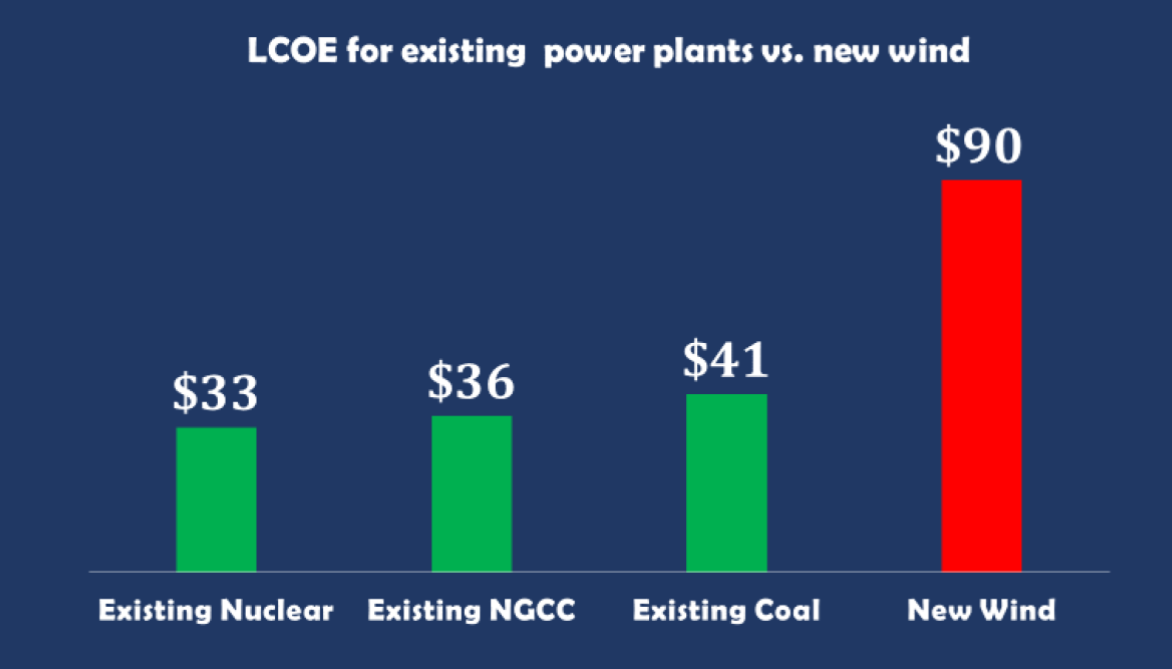
Existing coal plants operate at an average of $45.57 per megawatt-hour (MWh). A full 77% run below $60/MWh. These are fully depreciated assets — the original capital investment has long been paid off. Ongoing costs are mainly fuel, operations & maintenance (O&M), and modest ongoing capital expenses.
Higher utilization (capacity factor) dramatically lowers per-MWh costs by spreading fixed expenses over more output. The cheapest plants in their dataset (e.g., Labadie at $22.13/MWh, Northeastern at $22.81/MWh) run at high capacity factors around 63–70%. Lower-utilization plants cost more.
Direct comparisons (from their analysis):
Existing nuclear: $29.41/MWh
Existing combined-cycle natural gas: $41.55/MWh
Existing wind: $59.78/MWh
Existing solar: $102.40/MWh (small plants excluded)
New wind (EIA AEO, no firming): $62.09/MWh
New solar (no firming): $74.55/MWh
New wind with firming (Lazard methodology): $86/MWh
New solar with firming: $110/MWh
Existing coal is 27% cheaper than new wind and 40% cheaper than new solar on a straight LCOE basis — and the gap explodes once intermittency and firming costs are included.
Coal’s Role in the Current U.S. Energy Mix
Coal’s share of total U.S. primary energy consumption has fallen to about 9% in 2025 (down from 37% in 1950), as the power sector shifted toward natural gas and renewables.
In electricity generation (where nearly all U.S. coal is used), coal’s share has declined sharply but remains meaningful:2024: Coal ≈ 15–16%
2025: Coal rose slightly to ~17% in some periods due to demand and weather, before a projected decline toward 15–16% in 2026
Recent monthly data (e.g., March 2026): Coal ≈ 12.65%
Wind + solar combined have overtaken coal in several recent periods
Approximate 2025 U.S. electricity generation mix (EIA data):
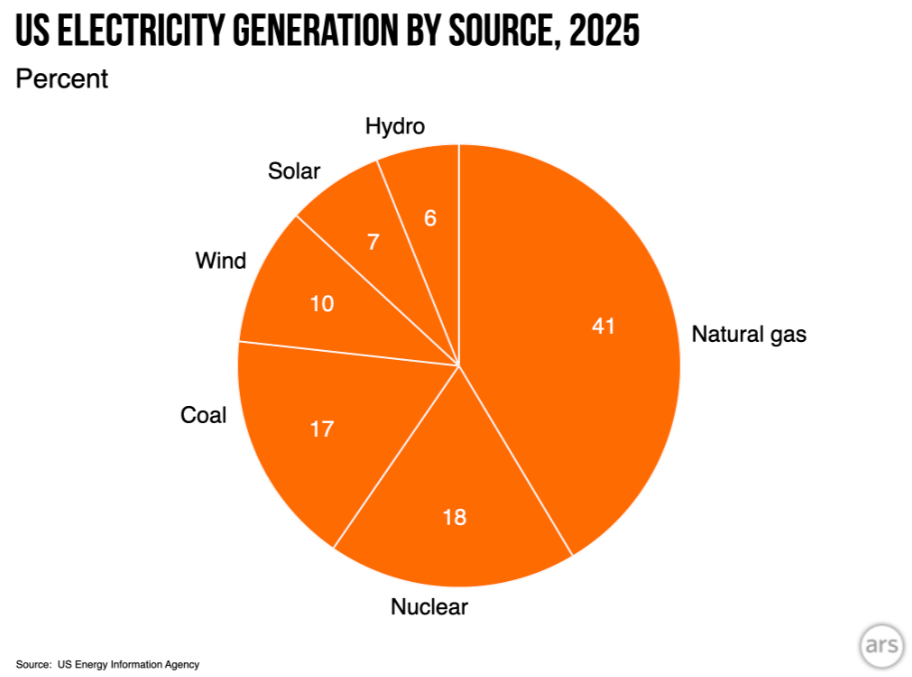
Natural gas dominates at ~40–41%, followed by nuclear (~18%), coal (~17%), wind (~10%), solar (~7%), and hydro (~6%).
Despite its lower overall share, coal provides critical baseload and dispatchable power. It offers on-demand generation with secure domestic fuel supplies — exactly what the grid needs as electricity demand surges from AI data centers, electrification, manufacturing resurgence, and EVs.
The President’s Executive Orders:
Keeping Affordable Coal Online
President Trump has issued targeted Executive Orders to reverse years of policy-driven retirements and support coal as part of a reliable, affordable grid:
April 8, 2025: “Reinvigorating America’s Beautiful Clean Coal Industry” directs agencies to remove regulatory barriers, review and rescind policies that discriminate against coal production and generation, accelerate permitting, and support domestic coal for energy security and growing demand.
February 11, 2026: “Strengthening United States National Defense with America’s Beautiful Clean Coal Power Generation Fleet” explicitly recognizes coal’s role in grid resilience for military installations and defense-industrial bases. It directs the Department of War (Pentagon), in coordination with DOE, to procure power from the U.S. coal fleet via long-term agreements prioritizing reliability and blackout prevention.
These build on earlier actions, including DOE emergency orders under Section 202(c) of the Federal Power Act to keep specific coal plants running past planned retirement dates in regions like MISO and PJM where reserve margins are tight. DOE has also announced hundreds of millions in funding to modernize and expand coal capabilities.
Will these orders help keep coal contributing while keeping energy affordable?
Yes. By preventing the premature closure of low-cost, depreciated coal plants (many operating well below $60/MWh), the orders preserve some of the cheapest dispatchable generation on the system. Retiring these plants without adequate replacements has already driven up costs and reliability risks in multiple regions.
Keeping them online:
- Maintains lower wholesale and retail electricity prices
- Provides fuel-secure baseload that complements (rather than competes inefficiently with) growing renewables
- Buys time for new dispatchable capacity (natural gas, nuclear, or advanced coal) to come online
- Supports national security and economic growth amid record electricity demand
Critics claim forcing plants to stay open raises costs, but the Energy Bad Boys data shows the opposite for most existing units: they are cheaper than the alternatives being built to replace them.
Bottom Line
The myth of “expensive coal plants” collapses under scrutiny. Most existing U.S. coal units are among the most affordable generators on the grid today — cheaper than new wind or solar even before accounting for the massive system costs of intermittency. Coal’s share of the mix is lower than in decades past, but its value as reliable, affordable, dispatchable power has never been higher. President Trump’s Executive Orders represent a pragmatic course correction: leverage what we already have (cheap, existing coal) while building the future. This approach prioritizes affordable, reliable energy for American families and businesses over ideological timelines. The receipts from Energy Bad Boys confirm it’s the smart play.
- Energy Bad Boys: “Debunking The Myth of Expensive Coal Plants” — https://energybadboys.substack.com/p/debunking-the-myth-of-expensive-coal
- U.S. Energy Information Administration (EIA) — U.S. Energy Facts: https://www.eia.gov/energyexplained/us-energy-facts/
- EIA Short-Term Energy Outlook and Electricity data
- Ember Energy — U.S. Electricity reports
- White House Executive Order (April 8, 2025): Reinvigorating America’s Beautiful Clean Coal Industry — https://www.whitehouse.gov/presidential-actions/2025/04/reinvigorating-americas-beautiful-clean-coal-industry-and-amending-executive-order-14241/
- White House Executive Order (Feb 11, 2026): Strengthening U.S. National Defense with America’s Beautiful Clean Coal Power Generation Fleet — https://www.whitehouse.gov/presidential-actions/2026/02/strengthening-united-states-national-defense-with-americas-beautiful-clean-coal-power-generation-fleet/
- DOE announcements on coal funding and emergency orders (various 2025 releases)
The data is clear. Affordable energy starts with keeping our cheapest reliable resources running.
The post Debunking the Myth of Expensive Coal Plants: Energy Bad Boys Bring The Receipts appeared first on Energy News Beat.