
Brent settled above $101 on Wednesday, September 9, and WTI followed through the $100 level on Thursday morning in a sharp rally. Physical benchmarks had already been there. Dated Brent has held above $100 since September 3. Murban, DME Oman, the OPEC basket, and the Indian basket were already trading over that threshold. Futures are now catching up to what refiners have been paying for prompt barrels.
That catch-up is the story underneath the headline. It is also the setup Goldman Sachs described when it warned that the system can absorb trouble at one chokepoint—but not several at once.
Goldman’s Dual-Chokepoint Warning
In late July 2026, Goldman’s commodities team noted that nearly 9 million barrels per day had recently been moving through Bab el-Mandeb, with roughly 4 million barrels per day potentially difficult to reroute if friction hit Hormuz, Bab el-Mandeb, and Suez at the same time. Their base case at the time still assumed Hormuz would stay usable enough for a 2026 Q4 Brent average near $80 and a 2027 average near $75, with a large surplus next year. The risk case was different: if Hormuz disruptions persisted into 2027, Brent could exceed $120 in Q4 2026 and average around $100 in 2027. Sustained friction across all three arteries added another $25 of upside on top of that.
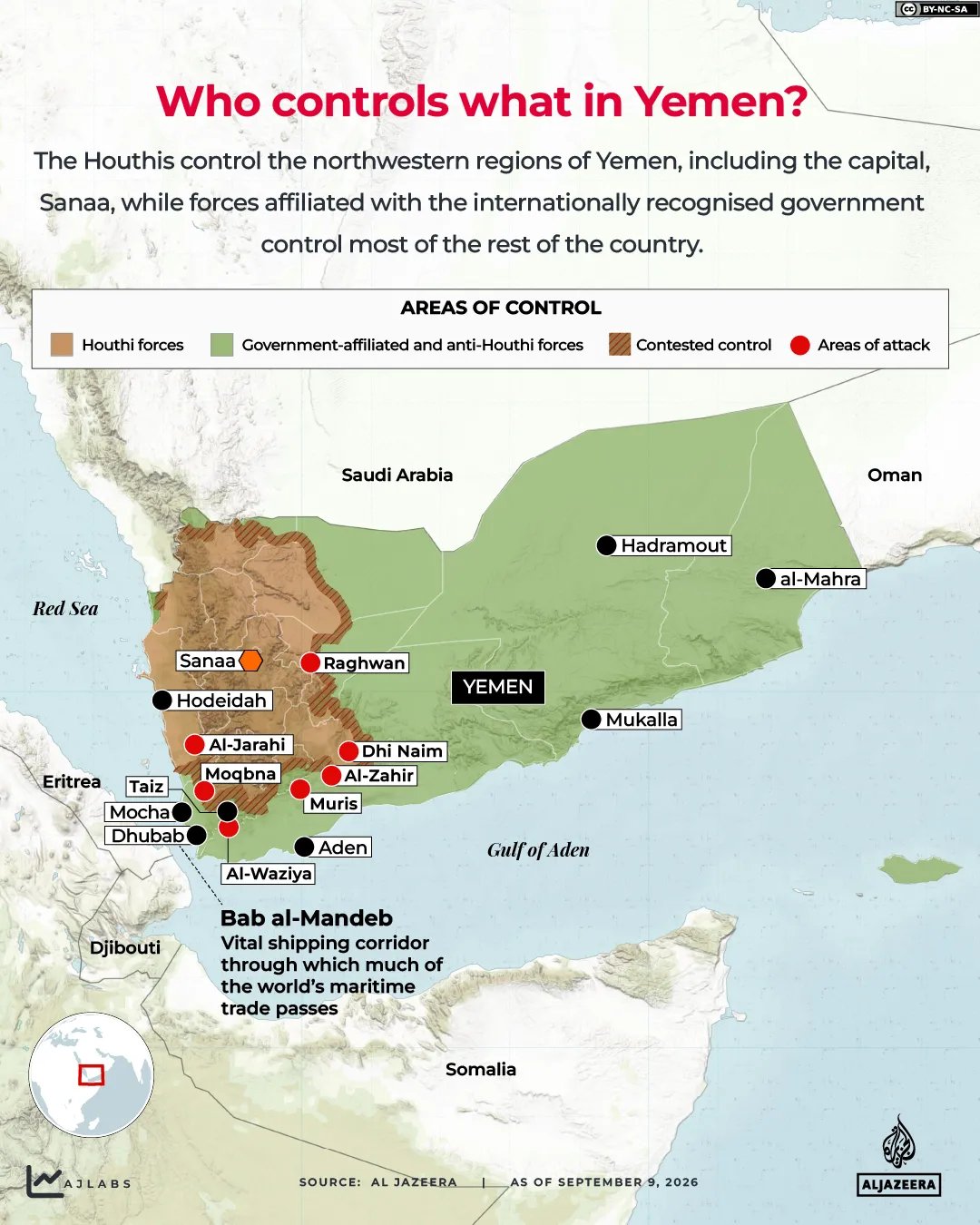
That was the map. This week’s news is the terrain.
Jack Prandelli’s September 10 post captured the operational shift: Houthis seized the Red Sea port of Mocha and were attacking the Hanish islands. Government forces were pulling back toward Dhubab, on the Bab el-Mandeb coast opposite Perim Island. Hormuz has been the priced risk for months. The Red Sea route—Yanbu loadings after Saudi crude moved west on the East-West pipeline—has been the workaround. Mocha puts Houthi forces within reach of both shores of the strait that is now the exit for that workaround. The market has priced in a damaged Hormuz. It has not fully priced in losing the Red Sea as well.
The same thread noted reporting that Tehran told Pakistani envoys it does not control the Houthis, and that Vance and Rubio have privately warned the conflict could run into January 2029. Whether those timelines hold is secondary to the shipping arithmetic: if Dubai and Perim come under effective Houthi pressure, Saudi crude has no clean sea route east or west that is not under fire. Suez recovery would reverse.
Suez becomes the remaining “clean” path out of the Gulf. That is a different price regime than a single impaired strait.
Why This Rally Has Legs
Irina Slav’s OilPrice analysis, updated September 10, makes the inventory case that sits under the geopolitics. For months, prices were capped by reports of improving tanker traffic through Hormuz even after the June ceasefire collapsed. That changed with the latest escalation. Hormuz outflows that had recovered toward 6–9 million barrels per day were slashed again; no VLCC had exited the strait since September 2, according to Kpler via Reuters. Some 8.3 million barrels per day of Middle East production remained shut in as of July, per the IEA. Global inventories fell 69 million barrels in July—an average draw of 2.7 million barrels per day. Inventories are not bottomless. Seasonal demand typically rises in the fourth quarter. There is no clear diplomatic off-ramp in the reporting.
Goldman has since raised official year-end numbers—Brent to $85 and WTI to $80 for December 2026, and $80/$75 for 2027—while keeping the $120 upside if 2027 Gulf output stays about 4 million barrels per day below pre-war levels, and an $80 downside if exports normalize. Daan Struyven has been explicit that recent attacks raise the odds disruptions broaden and intensify, and that the bigger shocks sit in products and gas, not just crude. The bank has recommended long diesel and natural gas as the cleaner hedge.
Paper Catching Physical:
Is this the short-term spike that lets paper prices catch physical tanker deliveries into refineries? In part, yes—and that is already visible.
Physical cargoes lead when ships cannot sail, and refiners need barrels now. Dated Brent, Dubai/Oman differentials, and delivered Asian grades have spent much of this war at a premium to front-month futures. Paper markets price a later delivery month and a probability-weighted resolution. When the resolution keeps slipping, the curve has to reprice. That is what a break of $100 in WTI and Brent futures represents after physical markers were already there.
It is not a complete catch-up. Prompt physical still embeds freight, war-risk insurance, longer Cape routings, and the simple scarcity of a cargo that can actually berth. Futures can overshoot or undershoot that delivered cost. But the direction of travel is clear: the longer dual-chokepoint risk stays live, the less the market can treat $100 as a “risk premium” that fades in the next contract. The paper market is being forced to acknowledge the tanker schedule.
Diesel Cracks at Historic Extremes
The tightest part of the barrel is not the crude quote. U.S. diesel crack spreads pushed above $100 a barrel in August for the first time on record, then printed above $106 in early September—well beyond the 2022 post-invasion peak near $89. European diesel cracks also crossed $100. ICE gasoil cracks and timespreads show the same prompt shortage. Goldman more than doubled its 2027 diesel-margin forecasts. Russian export restrictions, Ukrainian strikes on Russian refining, Middle East product disruptions, and a structurally tighter global refining system after years of closures have stacked on top of crude logistics.
That matters for duration. Crude can reroute, sit in floating storage, or be replaced at the margin by Atlantic Basin barrels. Middle distillate is harder. When diesel cracks are at all-time highs while crude is only now reclaiming $100 on the screen, the products market is saying the shortage is now, not in the December contract.
How Long Do Analysts See Elevated Prices?
Street forecasts have moved from “spike then glut” toward “impaired new normal into 2027,” with a wide band.
Goldman’s official path is still a decline from current prints if Gulf exports gradually recover, but $120 remains the live adverse case if output stays structurally short.
HSBC raised 2026 Brent to $90 and 2027 to $85, expecting Hormuz flows to rise only to about 8 million barrels per day by year-end and 9.5 million by mid-2027—versus 19–20 million pre-conflict. It does not see balance until around mid-2027 and flags a stalemate path near $120.
Capital Economics has shifted toward prices around $100 for the rest of 2026, with pre-war Middle East flows possibly delayed into early 2027.
Earlier Enverus work had Brent staying above $100 into the third quarter of 2027 even with some Hormuz recovery, on the argument that the inventory hole outlasts the headline.
Bank of America has cited a $95–$120 range if conflict continues, with $150 possible if infrastructure takes further damage.
The common thread is no longer a two-week risk premium. It is whether 2027 is a surplus year that never quite arrives on schedule. Inventories have already done a large part of the buffering. Further tightness requires either demand destruction, a real reopening of both waterways, or prices high enough to ration products—especially diesel—through the winter.
Where We Go From Here
The $100 WTI print is not the destination. It is the market admitting that the July dual-chokepoint scenario is no longer a footnote. Hormuz has been impaired for months. The Red Sea workaround is now under direct pressure at Mocha and Dubai. Physical barrels have been expensive. Paper is following. Diesel cracks are at record levels because the shortage is in molecules that have to arrive at a refinery and leave as fuel, not in a futures position.
If Houthis consolidate the Bab el-Mandeb coast and Hormuz stays a contested trickle, Goldman’s extra $25 on top of a $120 world stops looking like a tail. If diplomacy or naval control reopens a usable Red Sea lane and Hormuz traffic rebuilds toward HSBC’s 8–9.5 million barrel path, futures can still fade toward the $80s into 2027—after another inventory draw and another winter of expensive diesel.
The strait to watch has changed. The price is only starting to say so.
Check out the World’s Greatest Podcast Show Notes at EnergyNewsBeat.co or EnergyNewsBeat.com.
Appendix: Sources and Links
Primary items requested
- Jack Prandelli, X post, September 10, 2026: https://x.com/jackprandelli/status/2098039541605036034
- Irina Slav, “WTI Breaks $100—and This Rally Has Legs,” OilPrice.com, September 9–10, 2026: https://oilprice.com/Energy/Energy-General/Oil-Breaks-100and-This-Rally-Has-Legs.html
Goldman Sachs (Bab el-Mandeb / simultaneous disruption and later revisions)
- “Goldman Warns the World Is Running Out of Safe Routes for Oil,” Investing.com, July 23, 2026: https://www.investing.com/analysis/goldman-warns-the-world-is-running-out-of-safe-routes-for-oil-200684429
- “Goldman Flags Risk of $120 Oil If Mideast Ship Attacks Intensify,” Bloomberg, September 6–7, 2026: https://www.bloomberg.com/news/articles/2026-09-07/goldman-flags-risk-of-120-oil-if-mideast-ship-attacks-intensify
- “Goldman’s $120 oil scenario puts advisor portfolios on alert,” InvestmentNews, September 8, 2026: https://www.investmentnews.com/alternatives/goldmans-120-oil-scenario-puts-advisor-portfolios-on-alert/268101
- “Goldman Hikes Oil Forecasts Again as ‘Hormuz Shock’ Builds,” Bloomberg/Yahoo, April 27, 2026: https://finance.yahoo.com/sectors/energy/articles/goldman-hikes-oil-forecasts-again-064448566.html
- “Oil could end the year at $100 if flows don’t normalize soon, says Goldman Sachs,” MarketWatch, April 27, 2026: https://www.marketwatch.com/story/oil-could-end-the-year-at-100-if-flows-dont-normalize-soon-says-goldman-sachs-e35d542c
- “Goldman Sachs: Geopolitical Risk Could Add $10 to Oil Prices” (earlier Bab el-Mandeb/Houthi fragility note), OilPrice/Yahoo, June 19, 2025: https://finance.yahoo.com/news/goldman-sachs-geopolitical-risk-could-055733604.html
- Related: https://www.energyconnects.com/news/oil/2026/september/goldman-flags-risk-of-120-oil-if-mideast-ship-attacks-intensify/
- Related: https://www.ibtimes.com/middle-east-clashes-again-push-oil-toward-100-goldman-sachs-raises-forecasts-path-120-3807243
- Related: https://www.miningweekly.com/print-version/goldman-sachs-raises-oil-price-forecasts-on-prolonged-mideast-shipping-risks-2026-09-08
Prices, physical vs. paper, and market color
- WSJ, “Brent Holds Above $100 on U.S.-Iran Escalation,” September 10, 2026: https://www.wsj.com/finance/commodities-futures/oil-rises-amid-escalation-in-mideast-conflict-1394ff07
- Business Recorder / Reuters, Brent settlement above $100, September 10, 2026: https://www.brecorder.com/news/40438774
- Trading Economics crude snapshot: https://tradingeconomics.com/commodity/crude-oil
- GuruFocus WTI: https://www.gurufocus.com/economic_indicators/4510/oil-price
- Physical vs. futures discussion: https://www.detroitnews.com/story/business/2026/09/09/brent-crude-oil-rises-above-100-a-barrel-as-iran-conflict-intensifies/91677739007/
- https://www.mitrade.com/insights/commodity-analysis/oil-news/brent-above-100-tanker-attacks-supply-caps-20260910J1615
Diesel crack spreads
- Bloomberg, “Diesel Margins Surge to Highest on Record,” September 1, 2026: https://www.bloomberg.com/news/articles/2026-09-01/diesel-margins-surge-to-highest-on-record-as-supply-tightens
- RBN Energy, “Basket Case – The $100/bbl Diesel Crack,” August 27, 2026: https://rbnenergy.com/daily-posts/blog/100bbl-diesel-crack-or-how-2026-exposed-fragility-global-refining
- Energy News Beat on diesel cracks, September 3, 2026: https://energynewsbeat.co/diesel/diesel-crack-spread-hits-record-highs-as-the-global-downstream-market-is-hit-by-drones-and-oil-shortages/
- FT, European diesel premium record, September 3, 2026: https://www.ft.com/content/f117f347-e1e0-457c-83fc-ba4745581bb2
- TT News, crack above $106, September 1, 2026: https://www.ttnews.com/articles/diesel-crack-spread-record
Other analyst duration / balance views
- HSBC forecast raise: https://www.rigzone.com/news/hsbc_analysts_significantly_raise_oil_price_forecasts-09-sep-2026-184572-article/
- Business Insider, Wall Street 2027 revisions, September 10, 2026: https://www.businessinsider.com/oil-price-forecasts-global-shock-iran-war-wall-street-outlook-2026-9
- Capital Economics context: https://m.economictimes.com/industry/energy/oil-gas/oils-100-nightmare-is-back-as-worst-case-scenario-is-taking-shape/articleshow/133930259.cms
- Enverus (earlier through-2027 view): https://worldoil.com/news/2026/6/11/enverus-sees-brent-above-100-through-2027-after-hormuz-disruption/
- Reuters July poll on 2026 deficit / 2027 surplus: https://www.reuters.com/business/energy/middle-east-war-deepens-2026-oil-deficit-outlook-2027-glut-still-looms-2026-07-22/
The post WTI has crossed $100 as the market begins to price the scenario Goldman Sachs flagged months ago: not just a constrained Strait of Hormuz, but a simultaneous threat to the Red Sea exit that Saudi Arabia has used as its remaining seaborne outlet. appeared first on Energy News Beat.