
The ongoing conflict in Iran has triggered a profound energy crunch that extends far beyond crude oil prices. While Brent crude has retreated to around $90 per barrel from a wartime peak near $126, global shortages of refined products—diesel, gasoline, and jet fuel—have intensified. Global refinery throughput in July 2026 ran nearly 5 million barrels per day below year-earlier levels, constrained by Middle Eastern facilities and Ukrainian attacks that pushed Russian processing close to 20-year lows. U.S. refiners have filled the void, operating at or near record utilization rates and ramping exports.
This environment produced an extraordinary second-quarter earnings season for the energy sector. With 88% of S&P 500 companies reported, Energy posted the strongest earnings growth of any sector at 147% year-over-year and revenue growth of 42.5%. Oil & Gas Refining & Marketing led with 327% earnings growth. The U.S. diesel crack spread—the difference between diesel prices and crude—hit an all-time high of $102.20 per barrel in mid-August 2026.
Shares of leading U.S. refiners have soared: Marathon Petroleum (MPC) up roughly 110–122% year-to-date, Valero Energy (VLO) about 98–113%, and Phillips 66 (PSX) around 75–85%, far outpacing the S&P 500 Energy sector’s roughly 36% gain. Integrated major Chevron (CVX) and fuel-cell specialist Bloom Energy (BE) have also delivered strong results amid higher prices, production growth, and surging demand for reliable power.
Here is a closer look at five energy stocks capitalizing on the crunch, drawing from their latest earnings statements.
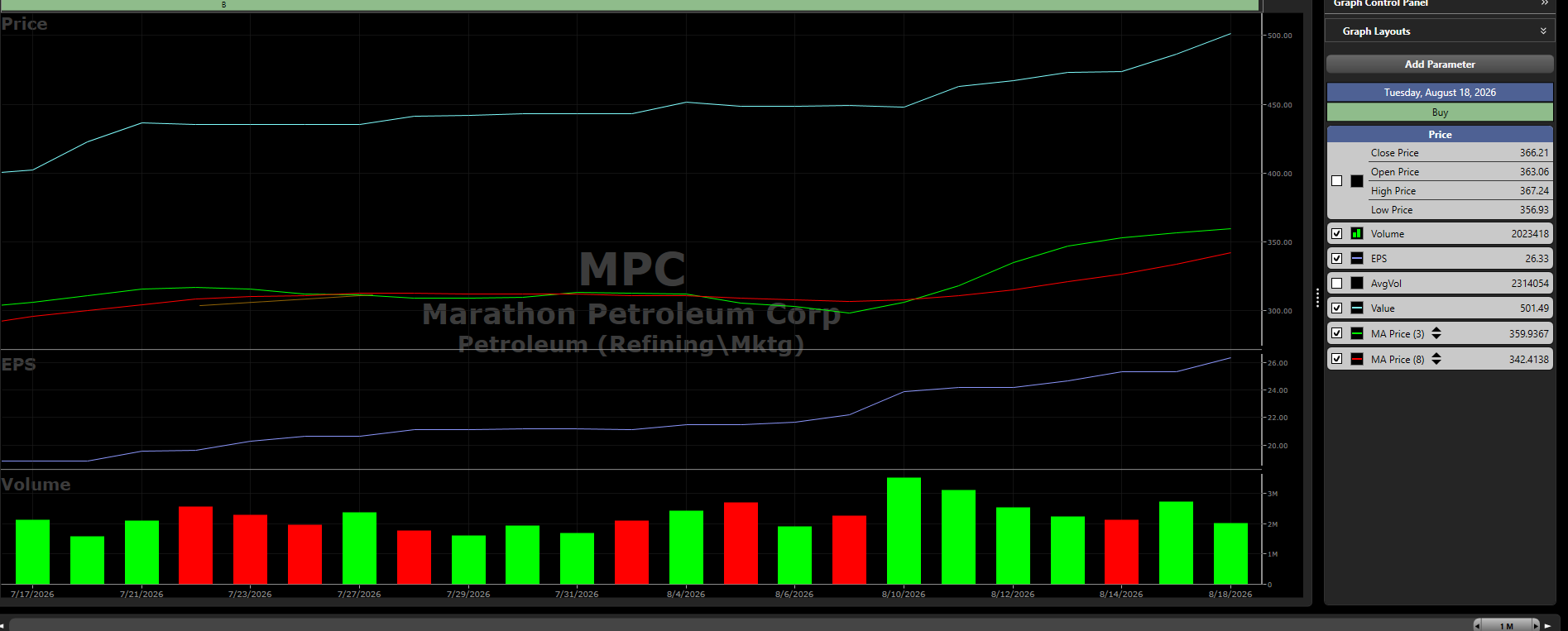
1. Marathon Petroleum (NYSE: MPC)
America’s largest refiner delivered one of its most profitable quarters. Net income attributable to MPC reached $5.1 billion, or $17.73 per diluted share, more than quadrupling the $1.2 billion ($3.96 per share) from Q2 2025. Revenue hit approximately $52.3 billion. Adjusted EBITDA totaled $8.5 billion.
The Refining & Marketing segment generated $6.66 billion in adjusted EBITDA as refining margins more than doubled to $36.33 per barrel. The system ran at 94% capacity, processing 2.9 million barrels per day, with Gulf Coast refineries at 100%. Marathon captured 112% of the benchmark margin through advantageous crude sourcing, record volumes of discounted Canadian heavy crude, and higher jet-fuel yields. The company returned over $2.8 billion to shareholders and benefits from its majority stake in midstream partner MPLX, which is raising distributions.
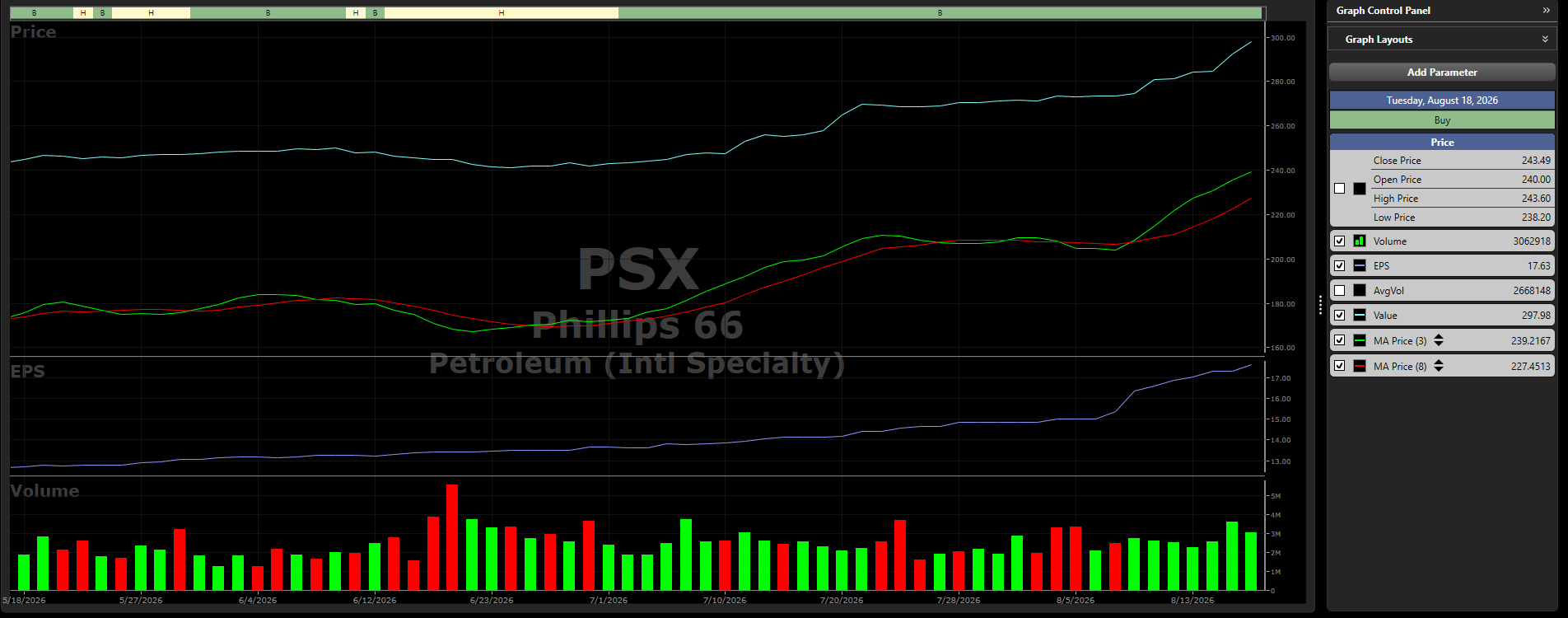
2. Phillips 66 (NYSE: PSX)
Adjusted earnings surged nearly 300% year-over-year to $9.41 per share (reported earnings $9.55), beating consensus, on strong refining margins that more than doubled to $24.08 per barrel. Adjusted EBITDA reached $5.89 billion. Refining utilization hit 96% with clean product yields of 86%.
Midstream posted record fractionation volumes and LPG exports. The company took final investment decision on the Western Gateway pipeline (joint venture with Kinder Morgan and HF Sinclair; Phillips 66 owns 49.9%), a 1,300-mile system capable of moving up to 230,000 barrels per day of refined products from the Midcontinent and Gulf Coast to Arizona and California. Debt was reduced by $6.6 billion in the quarter, with a target of net debt below $16 billion by year-end. Shareholder returns totaled $887 million.
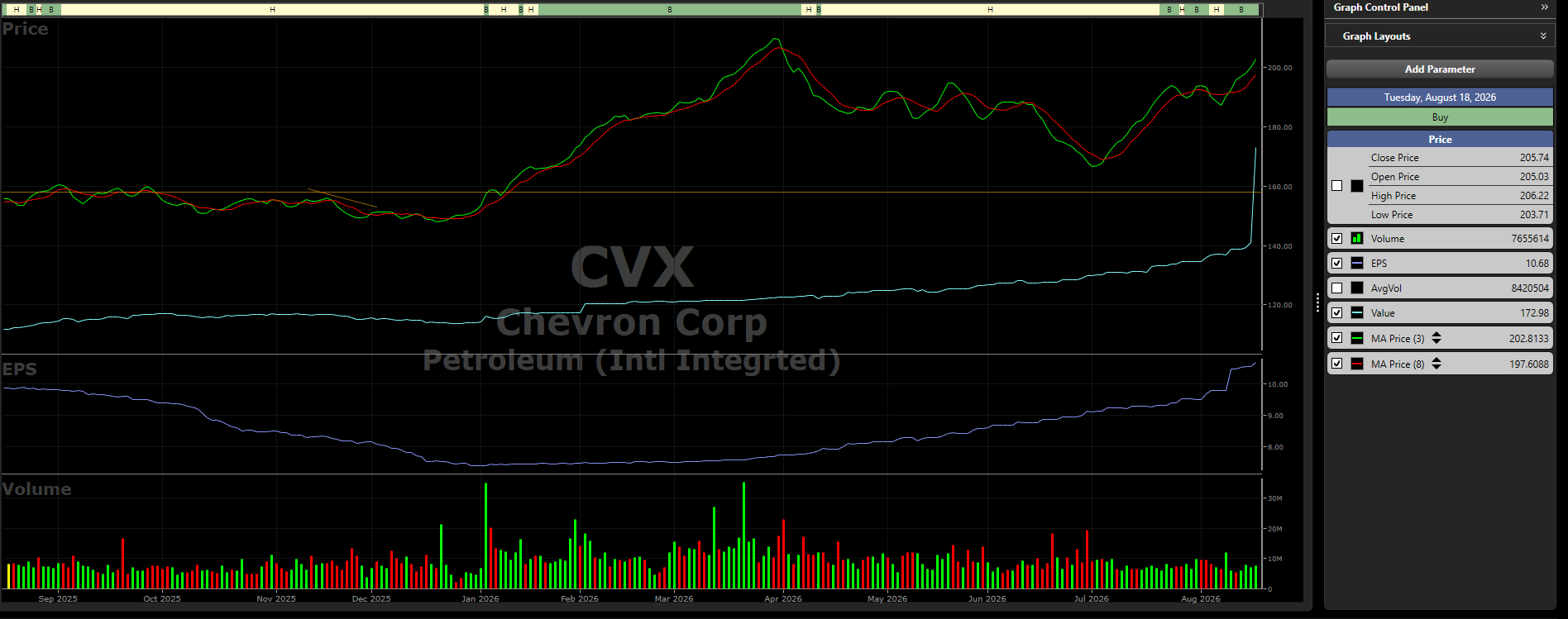
3. Chevron Corporation (NYSE: CVX)
Chevron reported its best quarter in six years. Adjusted earnings reached $12 billion, or $6.06 per share (reported $12.1 billion / $6.11), ahead of consensus. Worldwide production rose 20% to about 4.07 million barrels of oil equivalent per day, with U.S. output hitting a record 2.08 million boe/d, aided by the full contribution from the Hess acquisition.
Downstream profits surged to $4.9 billion from $737 million a year earlier, driven by higher margins and record U.S. refinery crude unit throughput (utilization above 97%). The company captured $1.5 billion in annual run-rate synergies from Hess (50% above initial targets and six months ahead of schedule). It returned $6.5 billion to shareholders ($3.5 billion dividends, $3 billion buybacks) while maintaining a strong balance sheet (net debt-to-cash flow 0.6x). A major oil and gas condensate discovery offshore Angola added further upside.
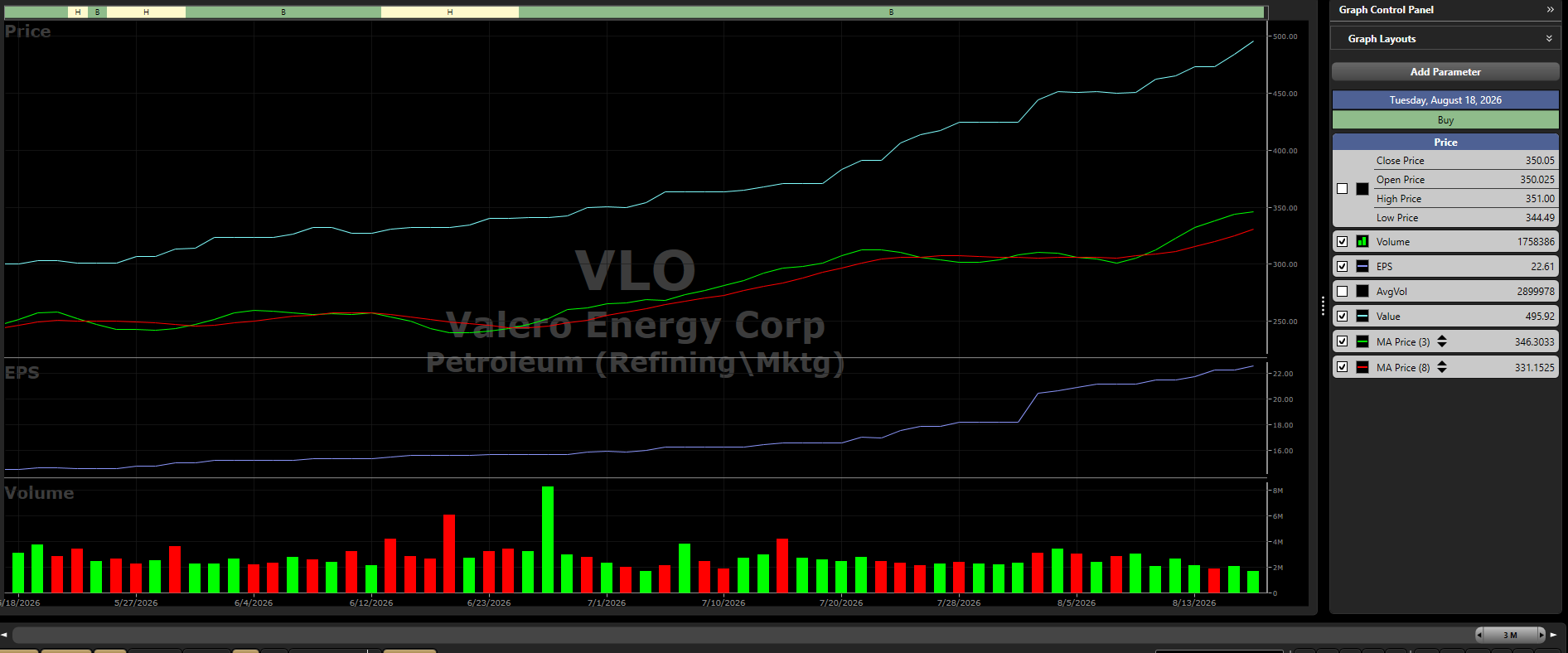
4. Valero Energy (NYSE: VLO)
Valero posted a record second-quarter profit of $3.7 billion, or adjusted $12.54 per share (up sharply from $2.28). Refining operating income more than tripled to about $4.4–$4.5 billion, with margins nearly doubling to $23.62 per barrel and throughput averaging 3 million barrels per day.
The renewable diesel segment swung from a $79 million loss to $717 million in profit. The company returned $2.6 billion to shareholders. Analysts raised price targets significantly (Barclays to $323, UBS to $355, Wells Fargo to $356). Rebuilding continues on a Port Arthur unit damaged in a March explosion, expected online by year-end.
5. Bloom Energy (NYSE: BE)
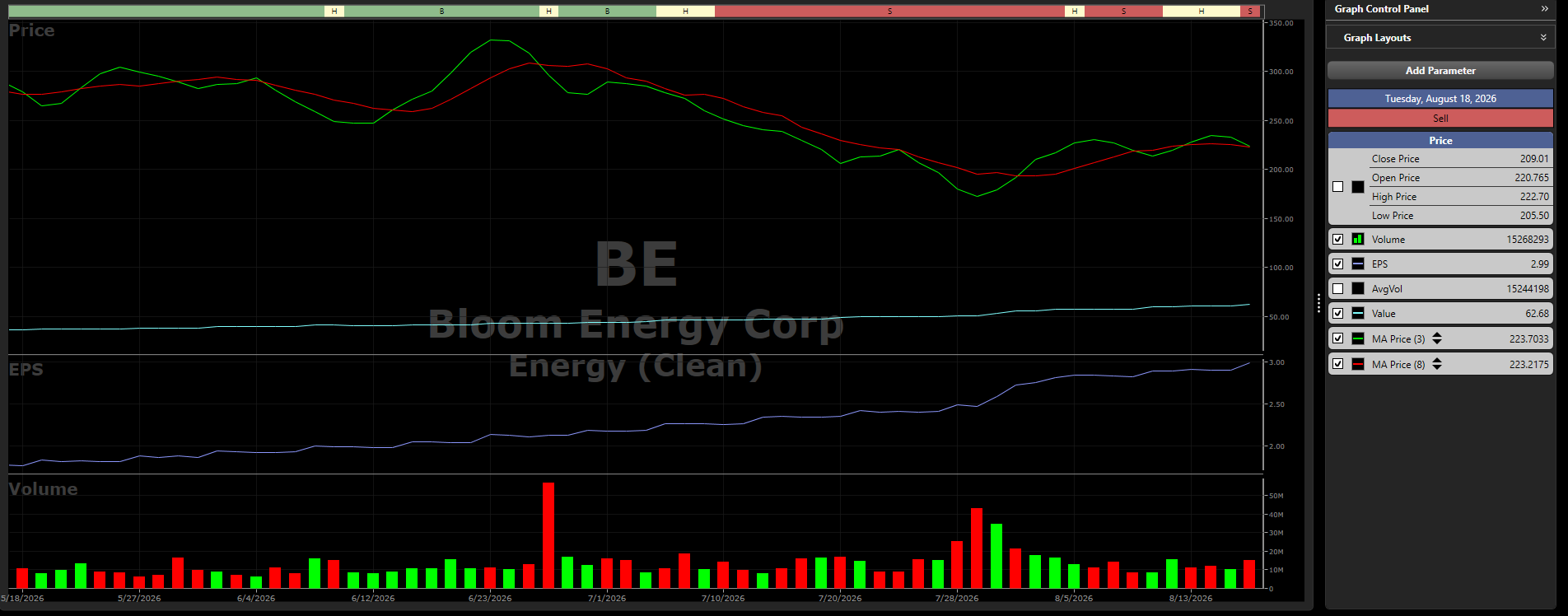
While the others focus on hydrocarbons, Bloom is capitalizing on the power side of the energy crunch—particularly AI-driven data-center demand that strains grids. Q2 revenue surged 165–167% to $1.065–$1.07 billion, with product revenue more than tripling. Adjusted EPS reached $0.78.
The company raised full-year 2026 revenue guidance to $3.9–$4.2 billion (roughly 100% year-over-year growth at the midpoint). Backlog is at record levels. Key deals include a Brookfield commitment of up to $25 billion for AI infrastructure powered by Bloom fuel cells and a 328 MW supply agreement for a New Jersey AI data-center campus.
Larger Crack Spreads, Physical vs. Paper Oil, and Broader Impacts
Crack spreads measure refining profitability (refined product price minus crude cost). The record diesel crack of over $100 per barrel reflects acute physical shortages of refined fuels rather than crude scarcity alone. Global refining capacity is the binding constraint.A key dynamic is the divergence between physical delivery costs and paper (futures) prices. Geopolitical risks in the Strait of Hormuz, higher shipping/insurance premiums, longer alternative routes, and constrained Middle Eastern and Russian refining have driven premiums for prompt physical barrels well above futures benchmarks at times. Physical markets have shown tighter conditions and higher costs for immediate delivery, while paper markets can lag or understate the stress due to financial flows and hedging. This basis differential (physical premium over paper) has amplified refining margins for companies that can source crude advantageously and process it into scarce products.
For investors: These conditions have translated into exceptional cash generation, debt reduction, elevated dividends and buybacks, and sharp share-price gains for refiners and integrated majors. High utilization and margin capture create operating leverage. Energy-sector strength also supports broader portfolios seeking inflation hedges or commodity exposure. Risks remain if the conflict de-escalates rapidly, refining capacity recovers, or demand weakens.
For consumers: Higher crack spreads flow through to elevated retail gasoline, diesel, and jet-fuel prices. U.S. gasoline has traded near $4+ per gallon in recent periods. Diesel, critical for trucking, raises transportation costs that eventually appear in groceries, goods, and services. Heating oil and jet fuel face similar pressure, especially heading into winter or peak travel seasons. Low distillate inventories (lowest for this time of year since the mid-1990s in some data) prolong the squeeze.
For the economy: Elevated refined-product prices act as a supply-side shock, contributing to inflationary pressures even if crude moderates. This can slow real growth, raise input costs for transportation-heavy industries, and complicate monetary policy. U.S. refiners’ export strength and production growth provide some domestic cushion and support energy-security narratives, while AI power demand (benefiting companies like Bloom) highlights structural electricity needs. Overall, the crunch redistributes gains toward energy producers and refiners at the expense of energy-intensive consumers and importers, with global ripple effects varying by region’s exposure to physical supply chains.
The Iran-related disruptions have created a rare period of extreme refining profitability and power-demand growth. The five stocks above illustrate how different parts of the energy complex—refining, integrated oil and gas, and distributed generation—are monetizing the crunch. Investors should monitor crack-spread sustainability, physical inventory levels, geopolitical developments, and demand signals closely, as these conditions remain volatile.
Appendix: Sources and Links
- Original OilPrice.com article: https://oilprice.com/Energy/Energy-General/5-Energy-Stocks-Cashing-In-On-The-New-Energy-Crunch.html (Alex Kimani, Aug. 18, 2026)
- Marathon Petroleum Q2 2026 results: https://www.prnewswire.com/news-releases/marathon-petroleum-corp-reports-second-quarter-2026-results-302842185.html
- Phillips 66 Q2 2026 results: https://investor.phillips66.com/financial-information/news-releases/news-release-details/2026/Phillips-66-Delivers-Strong-Second-Quarter-Results-and-Operating-Performance/default.aspx
- Chevron Q2 2026 results: https://www.chevron.com/newsroom/2026/q3/chevron-reports-second-quarter-2026-results and related SEC filings
- Valero Energy Q2 2026 results: Company investor releases and Reuters coverage (e.g., https://www.reuters.com/business/energy/valero-energy-beats-quarterly-profit-estimates-higher-refining-margins-2026-07-30/)
- Bloom Energy Q2 2026 results: Company 8-K and earnings materials (e.g., summaries via Seeking Alpha and stock filings)
- Reuters on diesel crack spread: https://www.reuters.com/business/energy/us-diesel-crack-surpasses-100-barrel-first-time-supply-disruptions-2026-08-17/
- Reuters on U.S. refiners’ profits: Related coverage of soaring refining results
- FactSet S&P 500 earnings data (sector growth figures)
- Additional context on physical vs. paper markets and Hormuz impacts: Analyses from Oxford Institute for Energy Studies, Foreign Affairs, CSIS, and market reports on differentials and premiums
- Bloomberg and other reporting on record diesel margins and inventory levels
All earnings figures and market data are drawn from company releases, contemporaneous financial reporting, and reputable energy-market sources as of mid-to-late August 2026. Markets remain dynamic; readers should consult primary filings and current prices.
The post 5 Energy Stocks Cashing In On The New Energy Crunch appeared first on Energy News Beat.