
As the Iran-U.S. conflict grinds toward the six-month mark in mid-August 2026, Tehran continues to assert control over the Strait of Hormuz—the critical chokepoint through which roughly one-fifth of global oil and LNG once flowed—while the United States maintains a naval blockade on Iranian ports and escalates economic pressure. Treasury Secretary Scott Bessent has signaled that Washington is preparing measures of “economic isolation like the world has never seen before,” combining intensified financial restrictions with the ongoing physical blockade that keeps Iranian oil largely bottled up.
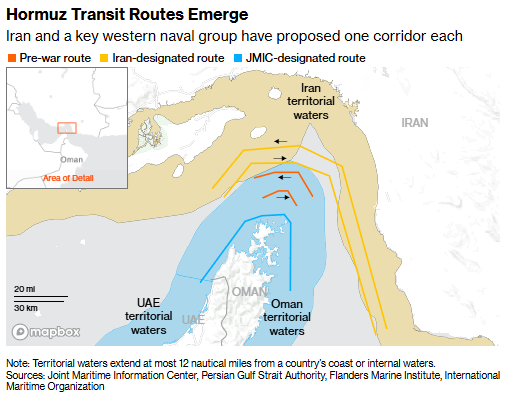
Efforts to restore normal traffic have stalled amid renewed Iranian attacks on vessels, U.S. enforcement actions, and mutual demands. Daily transits have collapsed from pre-war levels of more than 130 vessels to single digits or low teens in recent periods, with dark (AIS-off) activity rising and commercial operators largely avoiding the waterway or using limited southern corridors under U.S. Navy overwatch.
Gulf States Keep Oil Flowing—Via Pipelines and Workarounds
Other Persian Gulf producers have not been fully cut off. Saudi Arabia has maximized its East-West (Petroline) crude pipeline, which runs across the peninsula to the Red Sea port of Yanbu. Capacity has been pushed toward 7 million barrels per day (bpd), allowing the kingdom to redirect the bulk of its exports and largely bypass Hormuz. The UAE has relied on its Habshan-Fujairah (ADCOP) pipeline, delivering up to about 1.5–1.8 million bpd to Fujairah on the Gulf of Oman, outside the strait; a parallel expansion is being fast-tracked toward roughly 3.6 million bpd by 2027.
Iraq has sought to expand northern routes such as the Kirkuk-Ceyhan pipeline to Turkey’s Mediterranean coast and is accelerating discussions on lines toward Jordan (Aqaba) and Syria. Kuwait, Qatar, and Bahrain face steeper constraints with fewer or no large-scale bypass options, forcing production cuts or reliance on ship-to-ship transfers and limited escorted or dark transits. Overall Middle East crude/condensate flows through the strait itself have fallen sharply—at times to around 1.7 million bpd or lower in late July averages—though pipeline volumes and sporadic southern-route movements have prevented a total cutoff.
Ship-to-ship transfers outside the strait and U.S.-supported southern routing have also helped move non-Iranian barrels. The result is oil still reaching markets, but at a meaningfully reduced overall rate compared with the pre-war ~20+ million bpd from the region.
The Blockade’s Toll on Iran’s Income and Cash Flow
The U.S. naval blockade—first imposed in April 2026, lifted briefly under a June memorandum of understanding, then reinstated in mid-July after renewed attacks—has severely constrained Iran’s seaborne crude exports. Pre-war and early-conflict levels near 1.7–2 million bpd (or higher in some months) dropped to under 300,000 bpd at the blockade’s initial peak and have remained heavily suppressed, with July averages around or below 1 million bpd before further tightening and August activity appearing episodic at best.
Estimates of lost revenue run into the billions: early assessments put the cost at roughly $4.8 billion in the first weeks of the initial blockade; later figures cite daily economic hits in the hundreds of millions of dollars and cumulative losses of several billion across April–May and subsequent periods. China, which takes more than 90% of Iranian oil (often at steep discounts via teapot refiners and the shadow fleet), remains the primary buyer when volumes move, but enforcement has reduced the cash reaching Tehran. Floating storage and onshore inventories have built up, further pressuring Iran’s ability to monetize production.
Bessent’s forthcoming isolation package is expected to target remaining pressure points. Options outlined in recent analysis include tighter secondary sanctions on Chinese entities and refiners facilitating Iranian oil purchases (while carefully calibrating to avoid broader U.S.-China economic fallout ahead of high-level meetings); crackdowns on exchange houses and intermediaries (notably in the UAE) that help convert yuan payments into usable currency for Tehran; expanded targeting of bank accounts, crypto wallets, and assets worldwide; and measures aimed at the shadow fleet and facilitators. Critics note Iran already faces thousands of sanctions and a physical blockade, so additional steps risk U.S. economic blowback—particularly higher global oil prices if discounted Iranian barrels are further squeezed from the market—unless the administration prioritizes the Iran file above other considerations such as China relations.
Kharg Island Loadings: Sparse in the Last Month
Kharg Island, which normally handles around 90% of Iran’s crude exports, has seen sharply curtailed activity under the reinstated blockade. Satellite imagery and tracking data show the main terminals largely idle for roughly 25 days after mid-July, with berths empty in multiple August observations through early in the month. The first observed significant loading since late July came around August 12–14: a National Iranian Tanker Company VLCC took on approximately 2 million barrels at the Azarpad or western jetty. Offshore waiting areas still held 16–17 tankers (many dark) in mid-August imagery, but sustained high-volume loading has not resumed. Iran has continued limited activity at secondary terminals, and production appears roughly aligned with domestic refining needs in some assessments, reducing the immediate urgency for large exports.
Ships Trapped in the Persian Gulf
As of early August 2026, at least 70 commercial ships remained trapped in the Persian Gulf, including about 29 tankers. This is down sharply from the early-conflict peak of roughly 1,500–2,000 vessels and tens of thousands of sailors, thanks in part to the brief June–July MOU window that allowed many to exit. Roughly 65 of the remaining vessels entered during that temporary opening and have been unable to leave after the ceasefire collapsed and the blockade was reimposed. Thousands of seafarers continue to face extended stays under difficult conditions.
Overland Oil Export Routes
For Gulf Arab producers, overland pipelines (Saudi East-West to Yanbu and UAE Habshan-Fujairah) have been the primary and most effective bypass mechanism, with expansions underway. Iraq is advancing northern and westward options toward Turkey, Jordan, and Syria. Iran itself has more limited overland options for large-scale crude exports. Road and rail links exist to Turkey, Pakistan, Afghanistan, and Central Asian corridors toward China (including via Turkmenistan/Kazakhstan), and small volumes or swaps occur, but these cannot replace seaborne capacity at scale. Caspian routes support some logistics (including with Russia), yet oil export volumes remain marginal compared with pre-blockade maritime flows.
Impact on U.S. Consumers
Oil continues to reach global markets via Gulf pipelines, limited Hormuz transits, U.S. and other non-Gulf supply increases, and inventory draws, but at a reduced rate relative to normal. This has kept prices elevated versus pre-war levels even as they retreated from conflict peaks (Brent had spiked above $100–$120/bbl earlier). U.S. gasoline prices have reflected the global market—averaging around $4/gallon in recent readings, higher year-over-year—yet the United States is far more resilient than in past shocks as the world’s largest producer and a net exporter of crude and products. Higher prices raise costs for American drivers and businesses but also support domestic producers. Further tightening of Iranian volumes under Bessent’s isolation measures could add upward pressure if Chinese demand shifts to other crudes, while successful reopening of Hormuz or sustained pipeline flows would ease it. The net effect so far has been a manageable but persistent premium for U.S. consumers rather than a full-scale shortage.
The combination of Iran’s Hormuz leverage and the U.S. blockade-plus-isolation strategy has created a prolonged, lower-volume equilibrium for regional oil. Whether Bessent’s next steps force a diplomatic breakthrough or simply deepen the economic squeeze on Tehran will determine how long this reduced-flow reality persists for markets and consumers.
President Trump has joked that he will pick up full escalation after the midterm elections, and that might be the play if the Bessent economic pressures do not collapse the Iranian war machine.
Appendix: Sources and Links
- Bloomberg / Yahoo Finance: What Bessent’s Economic Isolation of Iran Could Look Like (Aug 15, 2026) — https://www.bloomberg.com/news/articles/2026-08-15/what-bessent-s-economic-isolation-of-iran-could-look-like and https://finance.yahoo.com/economy/policy/articles/bessent-economic-isolation-iran-could-133000835.html
- Bloomberg: Strait of Hormuz traffic restoration efforts (Aug 11, 2026) — https://www.bloomberg.com/news/articles/2026-08-11/strait-of-hormuz-what-have-iran-us-said-as-efforts-to-restore-traffic-stall
- Reuters: US can keep naval blockade indefinitely; Bessent comments (Aug 13, 2026) — https://www.reuters.com/world/middle-east/us-eyes-indefinite-iran-naval-blockade-oil-supply-shortfall-deepens-2026-08-13/
- The National: Iran resumes Kharg Island loading (Aug 16, 2026) — https://www.thenationalnews.com/business/energy/2026/08/16/iran-reroutes-oil-flow-as-loading-resumes-at-kharg-island-terminal/
- TankerTrackers / related reporting on Kharg VLCC loading (Aug 14, 2026)
- USNI News: 70 ships trapped in Persian Gulf (Aug 7, 2026) — https://news.usni.org/2026/08/07/70-ships-trapped-in-persian-gulf-as-iran-u-s-conflict-nears-six-months
- Kpler analyses on Hormuz flows, blockade impacts, and pipeline bypasses (various July–Aug 2026)
- Brookings, Reuters, IEA, CRS reports, and Windward maritime intelligence on pipelines, exports, and traffic (2026)
- Al Jazeera, UANI tanker trackers, and other sources on Iranian revenue losses and export volumes
- Additional context from NYT, AP, Wikipedia 2026 Strait of Hormuz crisis entry, and Gulf pipeline project reporting
All figures are drawn from publicly reported ship-tracking, satellite, and analyst data as of mid-August 2026 and are subject to the usual uncertainties of dark-fleet activity and incomplete AIS coverage.
The post So Iran Closes the Strait of Hormuz, Let’s See What Bessent’s Economic Isolation of Iran Could Look Like appeared first on Energy News Beat.