
In a significant development for U.S.-Iraq energy relations, President Donald Trump hosted Iraqi Prime Minister Ali al-Zaidi at the White House on July 14, 2026. The meeting focused on deepening strategic ties, advancing major oil and gas investments, and discussing infrastructure projects—including a revived pipeline that could bypass the volatile Strait of Hormuz. Trump also signaled a potential shift in U.S. military presence in Iraq.
The visit marks al-Zaidi’s first international trip since taking office earlier in 2026. It comes amid efforts to attract U.S. investment, expand American companies’ role in Iraq’s energy sector, and address security concerns, including pressure on pro-Iran militias.
Chevron’s Expanding Role: Taking Over from Lukoil and New Field Deals
A centerpiece of the discussions involves Chevron’s growing footprint in Iraq. In February 2026, Chevron signed preliminary agreements giving it exclusive negotiation rights for 12 months over the giant West Qurna-2 oil field—one of Iraq’s largest—previously operated by Russia’s Lukoil. Iraq had moved to transfer management of the field amid U.S. sanctions pressures on Lukoil.
Additional agreements cover the Nasiriyah field and exploration blocks in Dhi Qar Governorate, as well as the Balad field. U.S. officials have praised these talks, viewing them as a way to boost Iraqi production while aligning with American energy interests.
These moves position Chevron to increase its stake in Iraq’s vast reserves, potentially boosting output from fields that could add hundreds of thousands of barrels per day to global supply under stable terms.
The Game-Changing Pipeline: Bypassing the Strait of Hormuz
Iraq and the U.S. are advancing plans to revive the historic Kirkuk-Baniyas oil pipeline, running roughly 500 miles from Iraq’s northern fields (Kirkuk and Haditha in Anbar province) through Syria to the Mediterranean port of Baniyas. The original line, built in the 1950s with ~300,000 barrels per day capacity, was shut down in the 1980s and damaged over subsequent decades.
Iraq’s government recently approved a preliminary deal involving U.S. firms Chevron and Capital TI, along with a Qatari partner, to conduct feasibility studies on routes to Baniyas. An agreement is expected to be unveiled or advanced during or around al-Zaidi’s Washington visit.
Why bypassing the Strait of Hormuz matters:
Iraq has historically relied on the Strait of Hormuz for the vast majority of its oil exports (often cited around 95%). The strait remains a chokepoint vulnerable to disruptions from regional tensions, particularly involving Iran. Recent conflicts have already slashed Iraq’s seaborne exports dramatically in some periods.
Key advantages of the new Mediterranean route:
- Diversification and resilience: Provides an alternative export corridor directly to Europe and Mediterranean markets, reducing exposure to Gulf shipping risks and potential blockades.
- Geopolitical stability: Lessens the leverage any single actor (e.g., Iran) holds over Iraqi exports.
- Economic upside: Could support higher and more consistent export volumes, generating revenue for Iraq while creating opportunities for U.S. and allied companies in construction, operation, and related infrastructure.
- Regional cooperation: Involves post-Assad Syria (under new leadership aligned with certain U.S. and Gulf interests), potentially generating transit fees for Syria and strengthening broader ties.
A modern map of the proposed revival
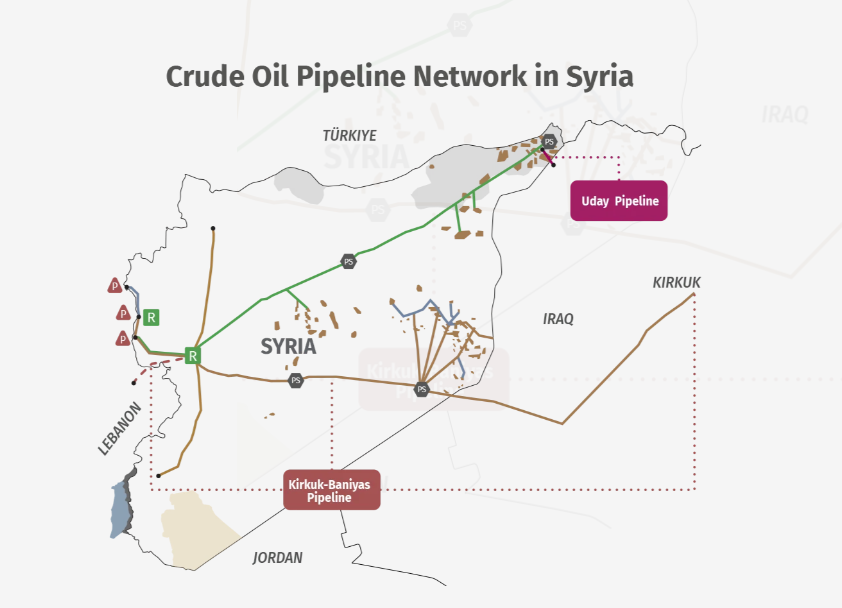
Reconstruction could take 2–3 years and require significant investment (potentially in the billions), but the strategic payoff is substantial for energy security.
“We Don’t Need U.S. Troops There Anymore”
During or around the meetings, President Trump stated that the U.S. no longer needs a military presence in Iraq to the same degree. In remarks captured on video, he noted, “We don’t need the military there. We were there to protect them, but we don’t think that’s going to be necessary any longer. Iran was a BIG burden on Iraq—they are NOT going to have that problem anymore!”
This aligns with broader U.S. goals of reducing its footprint while supporting Iraq’s stability and economic development. Discussions reportedly include security cooperation, militia disarmament timelines, and economic partnerships that could make a large ongoing troop presence less critical.
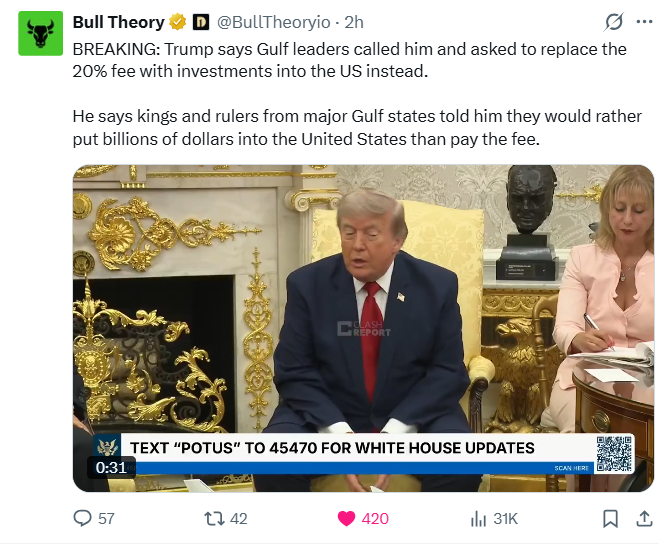
Also, President Trump replaces 20% fees for Investment in the U.S.
Positive Implications for Chevron and Investors
For Chevron, these developments represent a major expansion opportunity:
- Control/operation of a top-tier field (West Qurna-2).
- Potential involvement in pipeline studies and future infrastructure.
- Access to increased Iraqi crude flows via more reliable export routes.
- Stronger U.S.-government backing in a key producing country.
This could translate into higher production, revenue growth, and improved risk-adjusted returns.
For investors in Chevron and the broader energy sector:
- Growth catalyst: New production and infrastructure assets in a major OPEC+ country.
- Risk mitigation: Diversified export routes reduce geopolitical and shipping vulnerabilities that have plagued Hormuz-dependent supplies.
- Policy tailwinds: Alignment with the Trump administration’s pro-energy, pro-U.S. company stance and efforts to counter Iranian influence.
- Market stability: More reliable Iraqi exports could help balance global oil markets, supporting prices while rewarding companies positioned to benefit.
Overall, the combination of field acquisitions, new pipeline infrastructure, and improved bilateral relations signals a more favorable environment for U.S. energy investment in Iraq.
Looking Ahead
The Trump-al-Zaidi meeting underscores a pragmatic U.S. approach: leverage energy cooperation to advance strategic interests, reduce military commitments where possible, and open pathways for American companies. With Chevron poised for a larger role and a historic pipeline revival on the table, Iraq’s oil sector could see meaningful modernization and export diversification.
Watch for follow-up announcements on specific deals, pipeline feasibility progress, and any formal agreements emerging from the visit.
Appendix: Sources and Links
- X Post (Trump remarks on U.S. troops in Iraq): https://x.com/ThePatriotOasis/status/2077062313660571927
- Al Jazeera: Iraqi PM to meet US President Trump… (oil/gas deals expected) — https://www.aljazeera.com/news/2026/7/12/iraqi-pm-to-meet-us-president-trump-in-washington-to-deepen-strategic-ties
- US News/AP: Trump welcomes Iraqi PM Ali al-Zaidi — https://www.usnews.com/news/politics/articles/2026-07-14/trump-rolls-out-the-white-house-welcome-mat-for-new-iraqi-prime-minister-ali-al-zaidi
- Middle East Eye (exclusive on Kirkuk-Baniyas pipeline revival): https://www.middleeasteye.net/news/exclusive-syria-iraq-and-us-plan-unveil-mediterranean-pipeline-deal-bypass-hormuz
- Upstream Online (Iraq seeks Chevron for pipeline projects): https://www.upstreamonline.com/production/iraq-seeks-chevron-participation-in-oil-pipeline-projects/2-1-2013131
- Reuters/Bloomberg reports on Chevron-Lukoil West Qurna-2 (via multiple Feb 2026 coverage)
- Iraqi News: US praises Chevron talks for West Qurna-2 and Nasiriyah — https://www.iraqinews.com/iraq/us-praises-iraqs-talks-with-chevron-to-develop-west-qurna-2-nasiriyah-oil-fields/
- Additional context from Global Energy Monitor, Enerdata, and regional reporting on pipeline history and Hormuz vulnerabilities.
All information is current as of July 14, 2026. Energy markets and geopolitics evolve rapidly—verify the latest developments.
The post President Trump Meets with Iraqi Prime Minister Over Oil Deals, New Pipeline, and Reduced U.S. Military Footprint appeared first on Energy News Beat.