
Oil futures traders appear remarkably calm amid escalating risks in one of the world’s most critical energy chokepoints. While headlines focus on whether the Strait of Hormuz is “open or closed,” the physical oil market is grappling with far more complex and costly disruptions that futures prices are largely ignoring.
A recent analysis from OilPrice.com highlights how markets are underestimating the nuanced threats posed by renewed U.S.-Iran tensions.
The piece, published June 22, 2026, argues that the binary “open/closed” narrative misses critical operational realities affecting tankers, insurers, banks, and traders.
The “Strait of Schrödinger” and Hidden Risks
According to the report by Irina Slav, vessels may still transit the strait, but reliable tracking is compromised by GNSS/GPS spoofing, which manipulates positioning data and undermines voyage records, port-call verifications, and sanctions compliance. Iran has imposed a new mandatory insurance regime through the Persian Gulf Strait Authority (PGSA), initially provided free but likely to involve future fees, along with required transit permits and dictated routes. One tanker owner described the situation as “madness” and “a mess.” Kpler trade risk analyst Ana Subasic noted: “A vessel may be able to transit the Strait. But if its movement cannot be reliably observed… then its voyage record is compromised. Port-call verification fails. Exposure mapping breaks down.”These issues create massive information gaps and elevate risks for all parties involved in physical oil movements. Insurance costs have skyrocketed accordingly — from $150,000–$225,000 per VLCC voyage pre-conflict to $5–7.5 million afterward.
Tanker traffic maps illustrate the dramatic reduction in movements through the Strait of Hormuz since the escalation of tensions.
Normally, the Strait handles around 20–21 million barrels per day of crude and products — roughly 20% of global petroleum liquids consumption. Disruptions here have ripple effects far beyond simple volume losses.
Paper vs. Physical: A Widening Disconnect
This brings us to a critical market dynamic: the growing divergence between paper (futures) prices and physical delivery realities — especially relevant as we approach key contract expiration dates.
The July 2026 WTI futures contract (CLN26) saw its last trading day on June 22, 2026, with the first notice day for delivery falling on June 24.
This timing echoes the infamous May 2020 WTI contract expiration, which famously plunged into negative territory (reaching around -$37/barrel) when Cushing storage facilities were overflowing. Long holders refused physical delivery amid a glut, forcing aggressive selling.
Today’s situation at Cushing is the polar opposite.
As of the week ending June 12, 2026, Cushing crude inventories stood at just 20.03 million barrels — their lowest level since 2014 and perilously close to the operational floor of around 20 million barrels.
Stocks have fallen sharply due to Middle East supply disruptions, elevated U.S. refinery runs, and strong export demand.
Aerial views of the Cushing, Oklahoma, storage hub show the vast tank farm that is now running critically low on inventories.
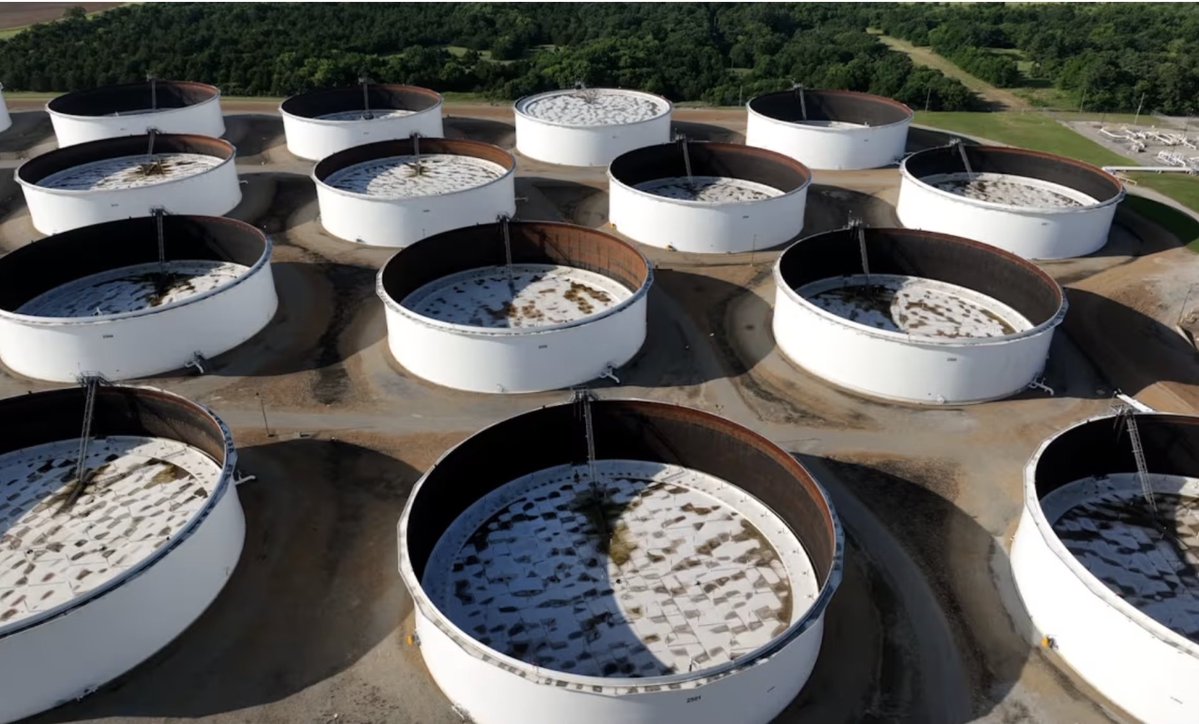
With storage near empty rather than full, the dynamics at expiration and into delivery will play out very differently. Low inventories signal genuine physical tightness rather than a glut. This environment typically supports stronger backwardation (prompt prices higher than futures) and can amplify any supply concerns. However, extremely low levels also risk operational friction — pipelines and facilities operate less efficiently near minimum thresholds, and quality issues (water, sediment) can arise.
Futures prices for near-term WTI contracts have traded in the low-to-mid $70s recently (e.g., August 2026 around $73.60), reflecting market expectations of eventual de-escalation.
Yet physical markets have shown significantly higher effective costs due to insurance premiums, freight risks, and disrupted flows. Historical and recent episodes demonstrate wide gaps between futures benchmarks and actual cargo prices (Dated Brent and regional physical assessments), sometimes tens of dollars per barrel wider than normal.
Layered Threats: Markets Are Missing
The combination of:
- Geopolitical flashpoints and potential escalation around Hormuz
- Operational complexities (spoofing, Iranian permits/insurance, sanctions compliance)
- Critically low Cushing inventories
- The physical-paper price disconnect
…creates a risk environment that futures markets appear to be under-pricing.
Even if diplomatic talks progress and some traffic resumes, the information gaps, higher insurance costs, and logistical frictions are likely to persist, sustaining uncertainty in physical supply chains.
What to Watch Next
With the July contract’s notice period beginning June 24, any widening basis (difference between futures and physical) or unusual delivery patterns could signal that markets are finally starting to internalize these threats. A sudden escalation in the region or further draws on already depleted Cushing stocks could trigger sharper volatility than futures currently imply.
Oil markets excel at pricing simple supply/demand balances in calm times. In today’s environment of layered, non-linear risks — from chokepoint operational chaos to storage extremes — they may be missing critical pieces of the puzzle.
- Irina Slav, “The Hormuz Threat Oil Markets Are Ignoring,” OilPrice.com, June 22, 2026: https://oilprice.com/Energy/Oil-Prices/The-Hormuz-Threat-Oil-Markets-Are-Ignoring.html
- Kpler analysis referenced: https://www.kpler.com/blog/hormuz-risk-question-has-changed-compliance-frameworks-havent-caught-up
- Lloyd’s List on Iran’s mandatory insurance: https://www.lloydslist.com/LL1157571/Iran-imposes-mandatory-insurance-on-ships-transiting-Strait-of-Hormuz-with-fees-likely-to-follow
- EIA Cushing crude oil stocks data (via multiple reports): https://www.eia.gov/dnav/pet/pet_stoc_wstk_dcu_ycuok_w.htm
- CME Group WTI Crude Oil Futures Calendar: https://www.cmegroup.com/markets/energy/crude-oil/light-sweet-crude.calendar.html
- Reuters and other reporting on Cushing draws and low inventories (June 2026)
- Additional context on physical vs. paper disconnect from Energy Aspects, WSJ, and market analyses (2026 reports)
This article was prepared for the Energy News Beat Channel based on publicly available data as of June 23, 2026. Markets can shift rapidly — always verify latest figures before trading decisions.
The post Oil Markets are not calculating all the threats appeared first on Energy News Beat.