
Optimism is surging in diplomatic circles. Pakistan’s Prime Minister Shehbaz Sharif announced that the United States and Iran have reached a “final, agreed upon text” for a deal aimed at ending their conflict in the Middle East. Mediators, with Pakistan in the lead, are now working on next steps. Sharif declared on X (formerly Twitter): “Peace has never been this close as it is now.” Iran’s foreign minister echoed that a deal “has never been closer,” and U.S. President Donald Trump signaled it could be signed within days.
But beneath the headlines of an imminent interim deal or memorandum of understanding, significant military, nuclear, maritime, and energy-market realities cast long shadows. Ongoing strikes, a closed Strait of Hormuz, complications around Iran’s enriched uranium stockpile, and the slow grind of global oil rebalancing suggest that any agreement faces steep hurdles — and that full compliance or rapid market stabilization remains uncertain.
Diplomatic Headlines vs. Military Reality
While Pakistan touts progress toward peace, U.S. forces have continued targeted strikes. The Bloomberg-reported article highlights U.S. strikes on Iranian drones even as talks for an interim deal proceed. Recent U.S. Central Command operations have hit Iranian radar sites, air defense systems, surveillance capabilities, and drone-related infrastructure in response to threats near the Strait and other provocations.
These actions underscore the fragile trust on both sides. A deal may be close on paper, but kinetic operations persist, reflecting deep-seated concerns over Iran’s intentions and capabilities.
The Strait of Hormuz: Still Not Open
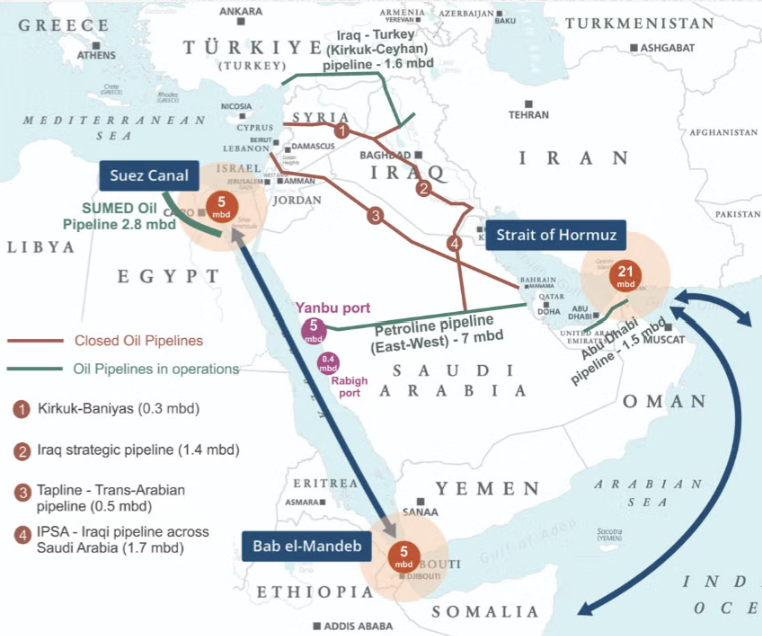
Iran’s Islamic Revolutionary Guard Corps (IRGC) Navy declared the Strait of Hormuz closed to all vessel traffic — including oil tankers and commercial ships — on June 10, 2026. Tehran claimed its forces struck two ships attempting to pass “illegally.” Reports confirm ongoing attacks on shipping in and near the Strait in recent days, with U.S. involvement in blockades, escorts, and strikes adding to the volatility.
The waterway normally handles about 20% of global seaborne oil trade. While some oil has continued to flow through alternative routes, pipelines, or limited escorted transits, the effective closure has removed roughly 14% of global crude supply from the market at peak disruption.
Nuclear Complications: Collapsed Tunnels and Buried Uranium
One of the most troubling developments involves Iran’s enriched uranium. According to reporting cited in a widely shared post by Mario Nawfal on X, Iran has collapsed tunnel entrances and placed explosive mines around underground sites believed to hold its stockpile — roughly half a ton of highly enriched uranium at the Isfahan Nuclear Technology Center (enough for approximately 10 nuclear bombs in theory).
This move followed public discussion of potential U.S. operations to seize the material and aligns with Trump administration demands in deal talks for Iran to hand over its enriched uranium. The result: verification, recovery, and removal would now require complex excavation, de-mining, and specialized nuclear teams. Iran could claim the material is buried or inaccessible, while the U.S. and international inspectors may never have full certainty about quantities or locations if material was relocated beforehand.
These physical barriers turn what was already a contentious verification issue into a far messier proposition for any deal requiring tangible nuclear concessions.
Oil Prices, Upcoming Contracts, and the Long Road to Rebalancing
Oil markets have shown resilience so far, defying early fears of $200+ per barrel spikes. Brent crude has traded in the $96–$100 range recently (down from peaks above $140 earlier in the conflict), cushioned by China’s reduced imports, record U.S. production, and massive releases from strategic reserves.
Illustrative Brent crude price movements amid 2026 disruptions (fluctuations driven by conflict and diplomacy).
However, analysts across firms like Société Générale, J.P. Morgan, EIA, and others warn that even a quick reopening of the Strait will not deliver instant relief:Global inventories have drawn down sharply. The IEA coordinated one of the largest-ever emergency stock releases (over 400 million barrels total, including ~172 million from the U.S. Strategic Petroleum Reserve).
The SPR and other national reserves are depleting toward multi-decade lows.
Rebuilding commercial inventories and strategic reserves will take months and require higher prices to incentivize new production and investment.
New production elsewhere needs stronger returns to ramp up meaningfully.
Some oil has gotten through despite the disruptions, but full supply restoration and market rebalancing will be gradual.
June 24 Contract Rollover Looms
Traders are watching the July 2026 WTI Crude futures contract rollover (last trading/first notice day around June 22–24). This period often brings volatility — and with diplomatic deadlines and potential deal news overlapping, it could act as a catalyst for sharp price swings in either direction.
In short: A deal might ease immediate fears, but the physical and inventory damage from months of disruption means higher-for-longer prices or renewed volatility are likely as the market works to refill reserves and restore normal flows.
Betting Markets and Doubts on Iranian Compliance
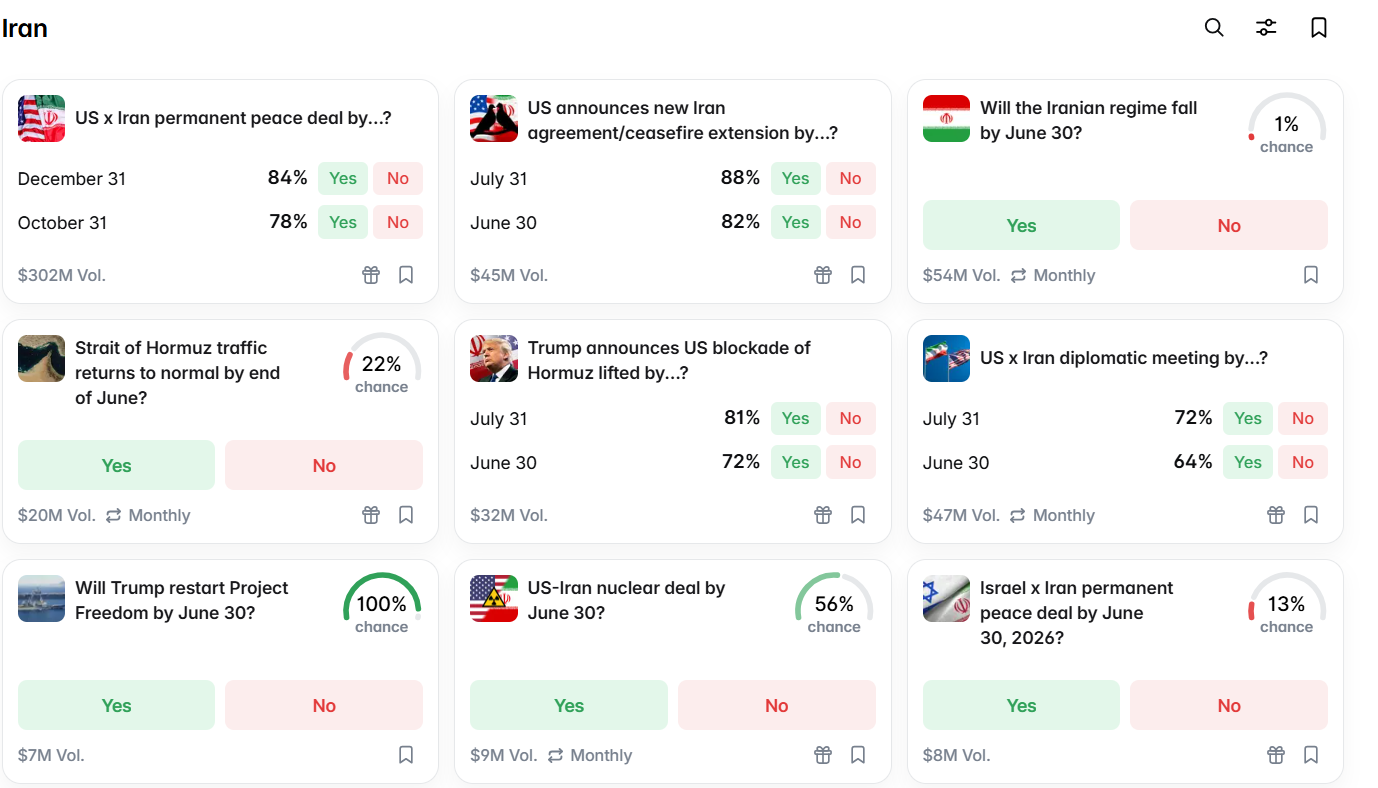
Prediction markets like Polymarket show strong betting activity on Iran-related outcomes, with hundreds of millions in volume. Markets on a U.S.-Iran permanent peace deal by December 31, 2026, currently price in roughly 80–83% probability of “Yes.” Shorter-term extensions or agreements by end of June or July also lean heavily toward “Yes” in many resolutions.
However, there is no direct high-volume market solely on “Will Iran fully honor the terms of any deal?” Historical precedent (e.g., the JCPOA experience) and current actions — such as physically burying and mining nuclear assets rather than preparing for transparent handover — fuel skepticism.
On the side that Iran cannot or will not fully honor a comprehensive deal requiring uranium surrender, verification access, and sustained restraint:
The regime has strong incentives to preserve leverage. Burying the uranium creates a fait accompli that complicates enforcement. Past agreements have seen Iran exploit ambiguities or delay compliance. A limited interim deal or ceasefire extension might hold temporarily for economic relief, but full, verifiable denuclearization or long-term behavioral change faces enormous structural and political obstacles inside Iran.
Conclusion: Shadows Over the Optimism
Pakistan’s mediation has produced diplomatic language that sounds promising. Yet U.S. strikes continue, the Strait of Hormuz remains effectively closed with recent attacks, Iran’s nuclear material is now physically harder to access or verify, and global oil markets face a prolonged rebalancing process even if traffic resumes soon.
Energy security, shipping insurance costs, refinery margins, and consumer fuel prices will feel these effects for months. Any deal struck now will be tested immediately by implementation realities — particularly around the nuclear file.
For the energy sector, the message is clear: Celebrate diplomatic progress if it materializes, but prepare for volatility, higher baseline prices, and the need for resilient supply chains. The problems lurking in the shadows are not theoretical — they are physical, verifiable, and directly tied to global energy flows. Stu Turley on the Energy News Beat Podcast has repeatedly said that the only way to control the IRGC is through Venezuelan-style controls over Kharg Island and the pipelines; they would still use tanker trucks and other means to move money to fund their weapons and other proxy fighters. They are running about 75,000 tanker trucks overland, and that still will not move the volumes like ocean VLCCs, but it is cash flow. The only real way to control the IRGC is to not have them in power.
We are not out of the woods yet, and I believe the world is healing, and we are in for some bumpy times before the world stabilizes. So put your tray table up and enjoy the ride.
Appendix: Sources and Links
- Bloomberg: “US Strikes Iranian Drones While Talks Continue for Interim Deal” (June 13, 2026) – https://www.bloomberg.com/news/articles/2026-06-13/us-strikes-iranian-drones-while-talks-continue-for-interim-deal
- AP News: “US and Iran have agreed to wording of a deal…” (June 12–13, 2026) – https://apnews.com/article/iran-us-ceasefire-hezbollah-israel-12-june-2026-7085e386e1c40ee6cfe634210970143f
- Mario Nawfal X post (June 13, 2026) on collapsed tunnels/uranium: https://x.com/MarioNawfal/status/2065743482992640369
- Seatrade Maritime / IRGC Strait closure reports (June 10–12, 2026)
- Fortune, CNBC, EIA, Société Générale, J.P. Morgan, Brookings, and Wood Mackenzie analyst notes on oil supply disruption, SPR drawdowns, and rebalancing (June 2026)
- Polymarket Iran prediction markets (live as of June 13, 2026) – https://polymarket.com/iran
- Additional context from Reuters, Washington Post, and energy market trackers on shipping attacks and contract rollovers.
Energy News Beat Channel – Tracking the intersection of geopolitics and global energy markets.
The post While Pakistan Says US-Iran Deal Close, Huge Problems Lurk in the Shadows appeared first on Energy News Beat.