
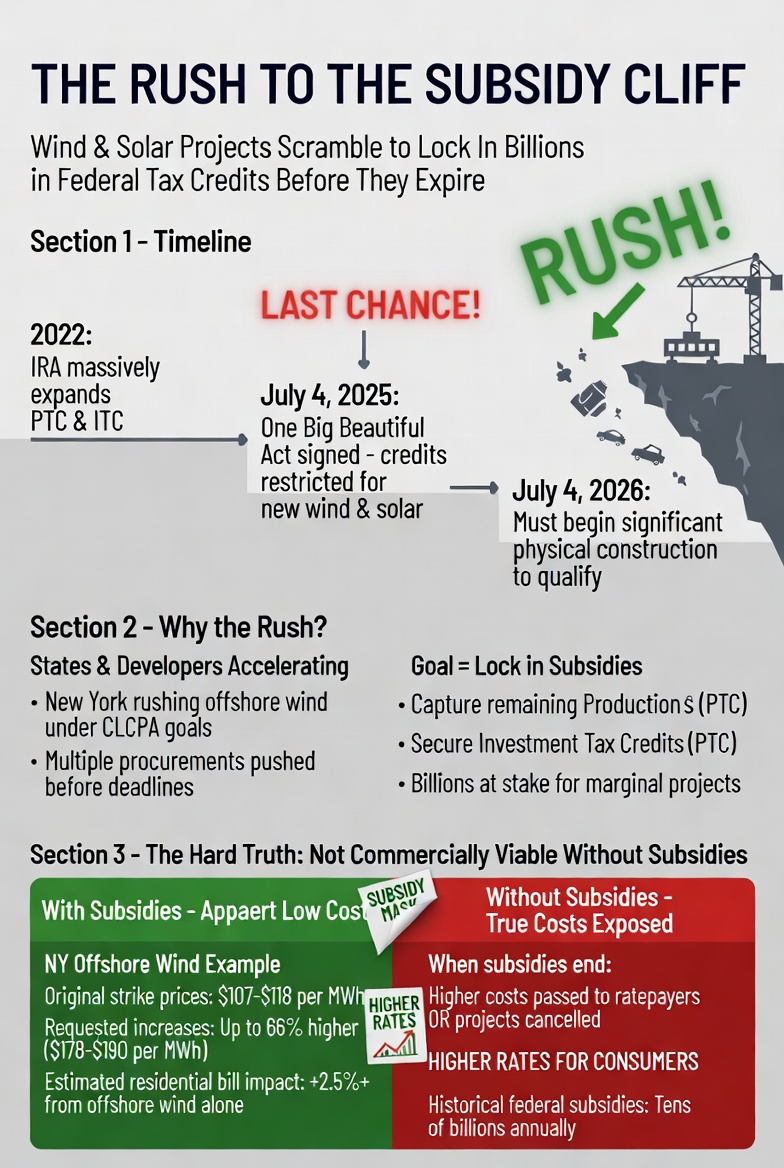
The U.S. wind and solar industries are facing a sharp policy reversal. The Trump administration’s One Big Beautiful Bill Act (signed July 4, 2025) and follow-on Executive Order have effectively ended the generous federal tax credits (Production Tax Credit under Section 45Y and Investment Tax Credit under Section 48E) that fueled much of the recent boom in intermittent renewables.
Pro-renewable advocates are loudly claiming the administration is “murdering” or dismantling an American industry through permit delays, project cancellations, and subsidy phase-outs. In reality, decades of subsidies have disguised the true system costs of wind and solar—costs now surfacing as higher electricity rates for consumers once those supports expire or projects must stand on more market-based terms.
The Bryce Perspective: “The Garroting of Big Wind”
Energy analyst Robert Bryce captured the moment in his June 12, 2026, Substack post, “The Garroting of Big Wind.” He argues that Big Wind is being throttled not just by the end of subsidies but by deliberate slowdowns in federal permitting. The Federal Aviation Administration (FAA) and Department of Defense have stalled or ignored “no hazard” determinations for dozens of projects totaling ~30 GW. Without demonstrated progress by early July 2026, deadlines tied to remaining tax credits, many projects risk losing eligibility.
Bryce, a longtime critic, dismisses industry complaints with characteristic bluntness (“Well, cry me a fu***ing river”) while highlighting wind’s documented issues: landscape blight, wildlife impacts (especially birds and bats), community opposition, and low energy density. He notes the American Clean Power Association (ACPA) reported just $67.5 million in 2025 revenue—underscoring how heavily the sector relied on federal support rather than organic market demand. Bryce frames the policy shift as long-overdue accountability after tens of billions in cumulative subsidies.
Pro-Wind/Solar Claims vs. Reality
Industry groups and aligned media portray the changes as existential: “impossible to build a new wind project,” an “uninvestable climate,” lost jobs, and higher future costs from reduced clean energy supply. Outlets and advocates have used strong language framing Trump policies as a “war on wind,” “carnage,” or even “murdering” the sector, citing paused offshore projects, lease cancellations (including a ~$1 billion deal with TotalEnergies to abandon NY/NC projects), and tightened rules.
The counter-reality is that these subsidies—projected in pre-change Treasury estimates to cost taxpayers hundreds of billions over a decade for wind, solar, and related credits—artificially lowered apparent costs. When projects reach commercial operation or subsidies wind down, the full expenses (including intermittency management, backup generation, and transmission) shift to ratepayers through higher power purchase agreements (PPAs), renewable energy certificate (REC) charges, or utility rate cases.
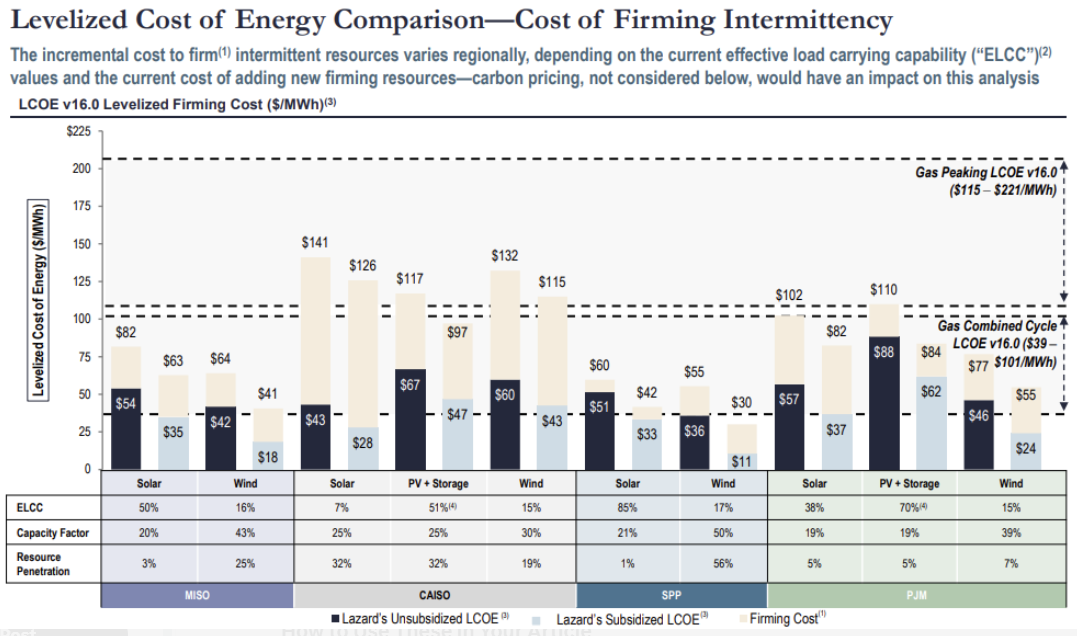
Levelized Cost of Energy – Cost of Firming Intermittency is left off most discussions.
New York’s Rush Before the Subsidy Cliff
New York exemplifies the pre-deadline scramble. Under the 2019 Climate Leadership and Community Protection Act (CLCPA), the state targets 70% renewable electricity by 2030 and 9 GW of offshore wind by 2035. NYSERDA has procured multiple offshore wind projects (Empire Wind 1 & 2, Beacon Wind, Sunrise Wind, etc.) via long-term contracts with strike prices (the guaranteed payment per MWh).
Developers have since sought massive renegotiations due to inflation, supply chain issues, and higher interest rates. Requests included:
- 27% hike for Sunrise Wind (~$110 to ~$140/MWh)
- 35% for Empire Wind 1 (~$118 to ~$160/MWh)
- 66% for Empire Wind 2 (~$107.50 to ~$178/MWh)
- 62% for Beacon Wind (~$118 to over $190/MWh)
Similar large increases were sought for onshore wind and solar contracts. NYSERDA estimated these could add roughly 2.5% (offshore) + 1.5% (onshore) to residential bills—around $4.67/month combined in earlier analyses.
These costs flow directly to ratepayers via per-kWh surcharges managed by NYSERDA and the Public Service Commission. A New York State Comptroller review noted that clean energy incentives and transmission upgrades (billions for projects like Champlain Hudson Power Express and Clean Path NY) are funded almost entirely by utility customers, contributing to New York’s already high electricity rates (among the nation’s highest).
The timing is no coincidence: Developers and the state are accelerating to lock in remaining federal tax credits before the July 2026 construction-start and 2027 placed-in-service deadlines. Without those credits, many marginal projects become uneconomic at the originally contracted prices, forcing either cancellation, rebidding at higher costs, or direct ratepayer hits.
Are most of the companies foreign-owned, and do they donate to the Democrats or Republicans in charge?
Onshore wind and solar are more mixed, with many U.S.-based developers alongside foreign subsidiaries. Foreign ownership raises questions about profits flowing overseas, supply chain dependencies, and local economic benefits, especially as projects race to qualify for expiring federal tax credits before the July 2026 construction deadline.
Major Offshore Wind Projects (Foreign-Dominated)These represent the highest-capacity, most politically prioritized projects. Nearly all flagship ones are led by European companies:
- South Fork Wind — 132 MW (12 turbines)
Developer/Owner: Ørsted (Denmark) with Eversource (U.S. utility partnership; Ørsted holds majority/control).
Status: Operational/recently online. Powers ~70,000 Long Island homes.
Country: Denmark. - Empire Wind 1 — 810 MW (54 turbines)
Developer/Owner: Equinor (Norway; took full ownership in 2024 after swapping out BP’s stake).
Status: Under construction/advancing toward 2027 operation. Powers ~500,000 New York homes.
Country: Norway (Norwegian government holds majority stake in Equinor).
Sunrise Wind — 924 MW - Developer/Owner: Ørsted (Denmark; acquired full ownership from Eversource).
Status: Advancing. Powers ~600,000 homes.
Country: Denmark. - Beacon Wind (potential) — Up to ~2,400 MW in some references
Ownership: Previously an Equinor/BP joint venture; adjusted post-2024 swaps (BP side or separate).
Country: Varied (UK/Norway elements historically).
Total for main contracted offshore projects: ~1.866 GW, overwhelmingly developed by foreign European companies (Norway and Denmark). These are the big-ticket items NYSERDA has procured.
Onshore Wind and Solar (More Mixed)Onshore projects are smaller individually and more numerous.
Ownership includes U.S. firms and foreign subsidiaries:
Examples from recent NYSERDA large-scale land-based renewable contracts (26 projects announced/executed):Solar: Dolan Solar, Hawthorn Solar, Somers Solar, Shepherd’s Run Solar, Homer Solar Energy Center, Highbanks Solar, Horseshoe Solar, Flat Creek Solar, etc. (various counties; capacities typically 20–100+ MW range).
Wind: Agricola Wind (Cayuga County), Valcour Bliss Windpark (Wyoming County), North Country Wind Farm (proposed up to 360 MW by Terra-Gen).
Notable larger/earlier examples:
Clusters by EDF Renewables North America (French parent company, U.S. operations) — hundreds of MW across projects (e.g., in Herkimer, Niagara, St. Lawrence counties).
Terra-Gen (U.S.-based) for wind projects.
Avangrid (Spanish parent: Iberdrola) — significant via utility ownership (NYSEG, RG&E) and renewable development.
Overall onshore picture: Many domestic U.S. developers handle smaller solar farms. However, foreign entities (European: Danish, Norwegian, Spanish, French, German like RWE) are active in larger projects and utility-tied developments. There have been public concerns about foreign buyers (including non-European) acquiring farmland for solar.
By capacity in NY’s headline renewable push: Foreign-owned companies (especially Equinor and Ørsted) dominate the big offshore projects. By sheer number of smaller onshore projects, it’s more balanced with U.S. developers.
Campaign Contributions to Democrats and Gov. Kathy Hochul
Data comes from campaign finance reports, OpenSecrets, local news, and disclosures (up to recent cycles):
- Avangrid (Spanish-owned Iberdrola subsidiary, owns NY utilities and renewables): Yes, substantial donations.Donated ~$160,000+ to Hochul via employee PAC in past cycles.
- Multiple large gifts to the New York State Democratic Committee (e.g., $100k, $100k, $150k in recent years to housekeeping accounts).
- PAC also contributes to federal Democrats.
- Ties to utilities that benefit from or influence rate cases and renewable policy.
Equinor (Norway) and Ørsted (Denmark): Limited or no prominent direct large campaign contributions found to Hochul or NY Democrats in available records. These companies appear to influence policy more through:
- Economic development commitments and job promises tied to project awards.
- Lobbying.
- NYSERDA procurement processes.
As foreign entities (with significant government ownership ties), they face different rules and often avoid heavy direct U.S. political giving compared to domestic utilities.
Broader context: Hochul has received major donations from utilities, energy interests, real estate, and various PACs (including some renewable-aligned). Avangrid stands out among energy players with clear ties to her campaigns and the NY Democratic Party. Other energy firms (fossil and utility) have also contributed significantly in past cycles.
Bottom line: Foreign (mostly European) companies lead the largest offshore wind projects that define NY’s renewable strategy. Some (notably Avangrid) have made notable political contributions to Hochul and Democrats, while others like Equinor and Ørsted appear to rely more on project economics and state procurement than direct campaign cash.
This structure aligns with NY’s policy push before federal subsidies fully phase out under the One Big Beautiful Bill Act. For the absolute latest or granular donation amounts, checking the NY Board of Elections public reporting system or OpenSecrets is recommended, as filings update regularly.
Are most installation companies foreign-owned, and do they donate to Politicians?
Onshore wind and solar are more mixed, with many U.S.-based developers alongside foreign subsidiaries. Foreign ownership raises questions about profits flowing overseas, supply chain dependencies, and local economic benefits, especially as projects race to qualify for expiring federal tax credits before the July 2026 construction deadline.
Major Offshore Wind Projects (Foreign-Dominated)
These represent the highest-capacity, most politically prioritized projects. Nearly all flagship ones are led by European companies:
- South Fork Wind — 132 MW (12 turbines)
Developer/Owner: Ørsted (Denmark) with Eversource (U.S. utility partnership; Ørsted holds majority/control).
Status: Operational/recently online. Powers ~70,000 Long Island homes.
Country: Denmark. - Empire Wind 1 — 810 MW (54 turbines)
Developer/Owner: Equinor (Norway; took full ownership in 2024 after swapping out BP’s stake).
Status: Under construction/advancing toward 2027 operation. Powers ~500,000 New York homes.
Country: Norway (Norwegian government holds majority stake in Equinor). - Sunrise Wind — 924 MW
Developer/Owner: Ørsted (Denmark; acquired full ownership from Eversource).
Status: Advancing. Powers ~600,000 homes.
Country: Denmark. - Beacon Wind (potential) — Up to ~2,400 MW in some references
Ownership: Previously an Equinor/BP joint venture; adjusted post-2024 swaps (BP side or separate).
Country: Varied (UK/Norway elements historically).
Total for main contracted offshore projects: ~1.866 GW, overwhelmingly developed by foreign European companies (Norway and Denmark). These are the big-ticket items NYSERDA has procured.
Onshore Wind and Solar (More Mixed)Onshore projects are smaller individually and more numerous. Ownership includes U.S. firms and foreign subsidiaries:
Examples from recent NYSERDA large-scale land-based renewable contracts (26 projects announced/executed):Solar: Dolan Solar, Hawthorn Solar, Somers Solar, Shepherd’s Run Solar, Homer Solar Energy Center, Highbanks Solar, Horseshoe Solar, Flat Creek Solar, etc. (various counties; capacities typically 20–100+ MW range).
Wind: Agricola Wind (Cayuga County), Valcour Bliss Windpark (Wyoming County), North Country Wind Farm (proposed up to 360 MW by Terra-Gen).
Notable larger/earlier examples:
- Clusters by EDF Renewables North America (French parent company, U.S. operations) — hundreds of MW across projects (e.g., in Herkimer, Niagara, St. Lawrence counties).
- Terra-Gen (U.S.-based) for wind projects.
- Avangrid (Spanish parent: Iberdrola) — significant via utility ownership (NYSEG, RG&E) and renewable development.
Overall onshore picture: Many domestic U.S. developers handle smaller solar farms. However, foreign entities (European: Danish, Norwegian, Spanish, French, German like RWE) are active in larger projects and utility-tied developments. There have been public concerns about foreign buyers (including non-European) acquiring farmland for solar.
By capacity in NY’s headline renewable push: Foreign-owned companies (especially Equinor and Ørsted) dominate the big offshore projects. By sheer number of smaller onshore projects, it’s more balanced with U.S. developers.
Campaign Contributions to Democrats and Gov. Kathy Hochul
Data comes from campaign finance reports, OpenSecrets, local news, and disclosures (up to recent cycles):
Avangrid (Spanish-owned Iberdrola subsidiary, owns NY utilities and renewables): Yes, substantial donations.Donated ~$160,000+ to Hochul via employee PAC in past cycles.
Multiple large gifts to the New York State Democratic Committee (e.g., $100k, $100k, $150k in recent years to housekeeping accounts).
PAC also contributes to federal Democrats.
Ties to utilities that benefit from or influence rate cases and renewable policy.
Equinor (Norway) and Ørsted (Denmark): Limited or no prominent direct large campaign contributions found to Hochul or NY Democrats in available records. These companies appear to influence policy more through:
- Economic development commitments and job promises are tied to project awards.
- Lobbying.
- NYSERDA procurement processes.
As foreign entities (with significant government ownership ties), they face different rules and often avoid heavy direct U.S. political giving compared to domestic utilities.
Broader context: Hochul has received major donations from utilities, energy interests, real estate, and various PACs (including some renewable-aligned). Avangrid stands out among energy players with clear ties to her campaigns and the NY Democratic Party. Other energy firms (fossil and utility) have also contributed significantly in past cycles.
Bottom line: Foreign (mostly European) companies lead the largest offshore wind projects that define NY’s renewable strategy. Some (notably Avangrid) have made notable political contributions to Hochul and Democrats, while others like Equinor and Ørsted appear to rely more on project economics and state procurement than direct campaign cash.
This structure aligns with NY’s policy push before federal subsidies fully phase out under the One Big Beautiful Bill Act. For the absolute latest or granular donation amounts, checking the NY Board of Elections public reporting system or OpenSecrets is recommended, as filings update regularly.
Bookmark this article, and let’s check back in to watch the rates STEADILY increase every year, even without any data centers in the area. Just Saying.
Broader Rate Impacts and Hidden Costs
Nationally, electricity rates have risen due to multiple factors (demand growth from data centers/AI, infrastructure needs, fuel prices), but aggressive renewable mandates in states like New York and California amplify compliance and integration costs. Studies show state renewable portfolio standard compliance added an average ~0.25–0.3 ¢/kWh in some periods, with higher burdens in high-mandate states.
Wind and solar’s subsidized levelized costs of energy (LCOE) look attractive on paper, but system-level costs—backup from dispatchable sources (often natural gas peakers), expanded transmission, overbuild for intermittency, and land-use/opportunity costs—are frequently understated or socialized. When subsidies end, these realities appear in higher PPAs or rate cases.
Federal subsidies for wind and solar have dwarfed those for other sources on a per-unit basis in recent years, distorting investment signals. Ending them levels the playing field and lets markets reveal which resources deliver reliable power at true cost.
What Will the Energy Mix Look Like?
With new wind and solar builds slowing dramatically (especially onshore and offshore without credits), the mix will likely evolve toward:
Greater reliance on existing and new natural gas generation for its flexibility and affordability.
Continued operation of the current wind and solar fleet (plus any projects that qualify for remaining credits).
Potential revival or extension of nuclear and other dispatchable low-carbon sources.
Slower overall renewable capacity growth compared to the subsidized 2020s boom.
EIA short-term outlooks still show renewables gaining share modestly through the late 2020s due to projects already in the pipeline and demand growth, but long-term trajectories will depend on state policies and economics without federal props.
The result should be a more reliable, cost-reflective grid less prone to the boom-bust cycles driven by temporary subsidies. Consumers in high-renewable-push states like New York may still face near-term rate pressure from legacy contracts, but the long-term trajectory favors affordability and reliability over ideology-driven mandates.
Ending the subsidy era forces honest accounting. Wind and solar have roles in a diverse mix, but only where they are genuinely competitive without perpetual taxpayer and ratepayer support. The coming years will test whether the industry can adapt—or whether the “garroting” of subsidized Big Wind simply returns energy policy to market realities.
Appendix: Sources and Links
- Robert Bryce, “The Garroting of Big Wind,” Substack (June 12, 2026): https://robertbryce.substack.com/p/the-garroting-of-big-wind
- White House Executive Order: “Ending Market Distorting Subsidies for Unreliable, Foreign-Controlled Energy Sources” (July 7, 2025): https://www.whitehouse.gov/presidential-actions/2025/07/ending-market-distorting-subsidies-for-unreliable-foreign-controlled-energy-sources/
- Reuters coverage of One Big Beautiful Bill Act and tax credit changes (July 2025)
- Empire Center for Public Policy, “New Wind Energy Costs Blow the Doors Off Projections” (2023, with ongoing relevance): https://www.empirecenter.org/publications/new-wind-energy-blows-doors-off-projections/
- New York State Comptroller, “Renewable Electricity in New York State: Review and Prospects”: https://www.osc.ny.gov/files/reports/pdf/renewable-electricity-in-nys.pdf
- NYSERDA and PSC filings on offshore wind contract adjustments (various 2023 references in reporting)
- Treasury Department tax expenditure estimates (pre- and post-OBBBA context)
- EIA Annual Energy Outlook 2026 and Short-Term Energy Outlook (various 2025–2026 releases)
- Additional reporting: Heatmap News, New York Times, AP, Reuters on permitting delays and project status (2025–2026)
All facts drawn from publicly available government, regulatory, and analytical sources as of mid-2026. Rate impact figures are estimates from the time of contract renegotiation requests and may vary with final PSC decisions.
The post With Wind and Solar Subsidies Ending, How Will the Energy Mix End Up? appeared first on Energy News Beat.