
The global oil market is facing its most severe supply shock in years. Ongoing disruptions in the Middle East—driven by conflict and the effective closure of the Strait of Hormuz—have slashed exports by more than 13 million barrels per day (mb/d), triggered massive production shut-ins, and sent inventories plunging. According to the International Energy Agency’s (IEA) April 2026 Oil Market Report, global observed oil inventories fell by 85 million barrels (mb) in March alone, with stocks outside the Middle East Gulf drawn down by a staggering 205 mb (equivalent to -6.6 mb/d). Analysts warn that continued disruptions could push inventories to all-time record lows by late April or early May.
This rapid depletion marks a sharp reversal from earlier 2026 levels, when inventories sat at multi-year highs. For investors and consumers alike, the implications are profound: tighter buffers mean higher price volatility, potential spikes in crude and product prices, and renewed focus on energy security.
Crude Oil Inventories: From Post-Pandemic Highs to Crisis-Driven Lows
Global observed inventories of crude and products stood at 8,210 mb in January 2026—the highest level since February 2021—before the latest disruptions accelerated draws. Roughly half of those stocks were held in OECD countries, 15% in Chinese crude tanks, and 25% as oil on water.
Last five years (2021–2026) trend overview (based on IEA and industry data): 2021–early 2022: Inventories remained elevated in the wake of the COVID-19 demand collapse, with builds in OECD commercial and strategic stocks providing a buffer.
2022–2024: Gradual draws as demand recovered faster than supply in some periods, though OECD stocks often hovered near or above five-year averages.
2024–early 2026: Renewed builds amid supply surpluses; global stocks climbed significantly in 2025 (some reports cite ~477 mb builds), pushing January 2026 levels to the highest in five years.
March–April 2026: Sharp reversal. March saw an 85 mb global draw despite localized builds in the Middle East (+20 mb onshore crude) and China (+40 mb crude). Importing countries in Asia lost 31 mb of crude stocks, with further declines expected.
IEA and EIA charts (linked in the appendix) illustrate this volatility: OECD commercial crude and product stocks tracked above five-year averages through much of 2024–early 2026 before the current crisis accelerated draws to potentially record-low territory. Global supply plummeted 10.1 mb/d in March to 97 mb/d, with OPEC+ output falling 9.4 mb/d.
Oil on Water / Floating Storage (Tankers)Floating storage has become a critical barometer of the crisis. In March, floating storage of crude and products in the Middle East surged by 100 mb as tankers were unable to sail through the Strait of Hormuz.
Overall, “oil on water” (crude held on tankers at sea for more than seven days) saw a net decline as the largest draw occurred in transit flows.
Vortexa tracking shows recent volatility: floating storage spiked to ~138 mb during peak disruption before plunging (e.g., -47 mb in one week to ~91–116 mb range) as partial restarts and alternative routing occurred. Over the past five years, floating storage has spiked during oversupply (2020–2021 pandemic) or geopolitical events, but the current Middle East concentration is unprecedented.
Refined Product Inventories:
Diesel, Gasoline, and Jet Fuel Under Pressure
Crude is not the only story—refined products are tightening faster in key regions:
Diesel / Middle Distillates: Middle East exporters are major suppliers; their loss has pushed cracks to all-time highs (Singapore diesel >$290/bbl at peaks). OECD distillate stocks were already seasonally variable and are now drawing sharply. Global tightness is evident, with limited flexibility to ramp up output elsewhere.
Gasoline: Relatively more balanced but still seeing draws. U.S. motor gasoline stocks recently hovered around 240–249 mb (per the latest EIA weekly data), with commercial crude ex-SPR in the 440–460 mb range.
Jet Fuel / Kerosene: Most vulnerable. Europe faces potential physical shortages by June (stocks could fall below the critical 23-day threshold). IEA warnings highlight “maybe six weeks” of supply left in parts of Europe as of mid-April; some countries are already below 20 days of cover (vs. never below 29 days since 2020).
Asian importers are also drawing heavily. Jet cracks have roughly doubled since the disruptions began.
U.S. product stocks (EIA): Distillates recently ~111–119 mb; jet fuel ~41–44 mb—both trending lower amid high exports and refinery dynamics.
Shortage areas: Europe (jet fuel and distillates), Asia importing countries (crude and products), select hubs like ARA (Europe) and Fujairah (record-low products). South Asia and parts of Sub-Saharan Africa are also flashing alerts for road and aviation fuels.
What Investors Should Watch
Low inventories act as a powerful price catalyst with minimal buffer against further shocks:
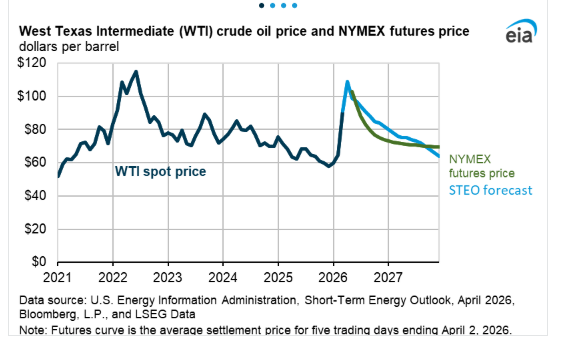
Bullish for crude and product prices: Physical markets have already seen Brent near $150/bbl peaks and extreme distillate/jet cracks. Sustained draws of ~5 mb/d (EIA Q2 estimate) support elevated prices and backwardation.
Upstream and energy equities: Oil majors, E&P companies, and midstream with storage/tanker exposure stand to benefit. Refiners may see mixed results (high cracks but lower throughputs).
Volatility and hedges: Geopolitical risk premium is high. Monitor ceasefire developments, alternative routing success, and IEA/OPEC+ releases. Strategic Petroleum Reserve draws (U.S. and coordinated IEA) provide short-term relief but are stop-gap measures.
Portfolio tilt: Energy sector overweight, with focus on companies resilient to volatility. Watch for demand destruction signals if prices stay elevated.
Resolution of the Hormuz situation could trigger a rapid inventory rebuild and price collapse—timing is everything.
What Consumers Should Brace For
Tighter inventories translate directly to your wallet and daily life:
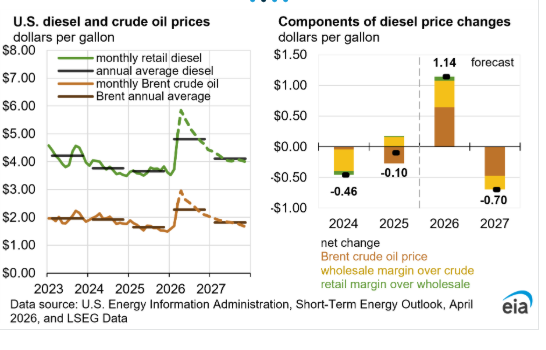
Higher fuel prices: Expect gasoline above $4/gal and diesel/jet fuel even higher in affected regions. Transportation costs (trucking, shipping, air travel) will rise, feeding into broader inflation for goods and services.
Aviation impacts: Flight cancellations or reduced schedules possible in Europe and Asia by late spring/summer if jet stocks fall below critical levels. Airfares are already climbing.
Broader economic ripple: Higher energy costs could slow growth, pressure household budgets, and exacerbate inflation. Diesel-dependent industries (agriculture, construction, freight) face margin squeezes.
Preparation tips: Lock in fuel contracts where possible, consider efficiency measures, and monitor local supply alerts. Governments may impose export bans or release strategic stocks to ease domestic pain.
In summary, the plunge toward record-low global oil inventories is a direct result of the largest supply disruption in modern history. While buffers existed entering 2026, the speed of the draw has caught markets off guard. Investors face a high-reward but volatile environment; consumers should prepare for sustained higher energy costs until flows normalize.
- IEA Oil Market Report – April 2026: https://www.iea.org/reports/oil-market-report-april-2026
- IEA Oil Market Report – March 2026: https://www.iea.org/reports/oil-market-report-march-2026
- EIA Short-Term Energy Outlook and Weekly Petroleum Status Report (U.S. stocks): https://www.eia.gov/outlooks/steo/ and https://www.eia.gov/petroleum/supply/weekly/
- Vortexa floating storage data (via MacroMicro and reports): https://en.macromicro.me/charts/44710/vortexa-global-crude-oil-floating-storage
- Additional analysis: UBS notes on record-low forecasts, Reuters, Business Insider coverage of Hormuz impacts.
Data as of mid-April 2026; markets move fast—check latest IEA/EIA releases for updates.
The post Global Oil Inventories Fall to Record Lows. What does this mean to investors and consumers? appeared first on Energy News Beat.