
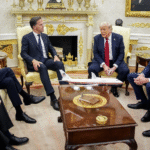

Trump’s Ultimatum: Tariffs as a Weapon Against Russia
According to insights from a recent Bloomberg report, President Trump explicitly warned of “very severe tariffs” at approximately 100% if no peace deal is reached in 50 days.
This threat comes as part of broader efforts to end the hostilities that have disrupted global energy supplies since Russia’s invasion began. Trump’s pledge includes sending more weapons to Ukraine, with the caveat that NATO—primarily European allies—will cover the costs.
This approach aims to maintain U.S. support for Kyiv without straining American taxpayers, while leveraging economic levers to force Russian President Vladimir Putin’s hand.
The Energy Market Fallout: Oil Prices Poised to Surge
The potential implementation of these 100% secondary tariffs carries profound implications for global energy markets. Analysts warn that such measures could disrupt up to 1.5–2 million barrels per day (bpd) of Russian oil supply, tightening the global market and driving Brent crude prices toward $90–$100 per barrel by mid-2025.
This price spike would stem from reduced availability of cheap Russian oil, forcing importers like India (which relies on Russia for about 40% of its seaborne crude) and China (around 12%) to seek costlier alternatives from the Middle East or the U.S.Compounding this are upcoming policy changes, including the EU’s ban on transshipments of Russian LNG effective March 2025 and reinstated tariffs on Venezuelan oil in April 2025.
If Trump’s tariffs materialize, they could mirror the 25–50% penalties previously applied to Venezuelan imports, further constricting supply chains. For U.S. consumers, this translates to higher gasoline and heating costs, potentially undermining the administration’s “Drill Baby Drill” agenda aimed at boosting domestic production and energy independence.
Political Ramifications: A Double-Edged Sword for Trump
President Trump’s strategy places him in a precarious political position. On one hand, aggressive action against Russia aligns with his tough-on-adversaries image and could rally support among hawkish Republicans and NATO allies. However, the resultant oil price surge poses a “huge political problem,” as elevated energy costs could stall America’s economic recovery and fuel inflation.
Critics, including Democrats and some within his own party, are likely to seize on this, portraying the tariffs as a self-inflicted wound that benefits opponents in upcoming midterms.Indeed, a climb to $90–$100 oil could inadvertently hand Democrats a winning narrative, allowing them to criticize Republican policies for exacerbating household burdens while claiming credit for any eventual de-escalation.
With control of the House and Senate at stake, Trump’s dilemma underscores the tightrope between foreign policy assertiveness and domestic economic stability.
The Ukraine Critical Minerals Deal is Now A Problem
Russian troops seized control of the Shevchenko lithium deposit around June 26-27, 2025, as part of their ongoing summer offensive in Donetsk.
This is not Russia’s first seizure of Ukrainian lithium; earlier in the war, forces captured a deposit in Zaporizhzhia in 2022, and additional potential sites in Donetsk have fallen under Moscow’s control.
Looking Ahead: Can Tariffs End the War?
Is Oil & Gas Right for Your Portfolio?
Crude Oil, LNG, Jet Fuel price quote
ENB Top News
ENB
Energy Dashboard
ENB Podcast
ENB Substack
The post 100 Percent Secondary Tariffs if no end to the Russia/Ukraine war in 50 days – President Trump appeared first on Energy News Beat.